

As global sports infrastructure continues to expand, developers are no longer only looking for individual products such as artificial turf, shock pads, sports flooring materials, or supporting system components. They are looking for partners who can help turn a sports facility concept into a reliable, playable, and commercially sustainable project.
This shift is especially clear in football fields, school sports facilities, community sports parks, stadium training areas, public sports venues, and multi-sport complexes. A successful facility now depends on much more than product quality alone. It requires early planning, system coordination, installation control, local condition adaptation, and long-term performance thinking.
Sports facility construction has entered a more demanding stage. Developers need to consider performance standards, user safety, operating efficiency, climate conditions, certification requirements, investment returns, and future maintenance costs at the same time.
Why Product Supply Alone Is No Longer Enough
In traditional sports facility procurement, developers often purchase different components from different suppliers. Artificial turf might come from one company, shock pads from another, and steel structures from another, and installation might be handled by a separate local contractor. While this approach can work for simple projects, it often creates coordination risks when the facility becomes more complex.
When responsibilities are divided too widely, product specifications may not match local construction conditions. Installation methods may not follow the intended system design. Delivery schedules may become disconnected. If performance problems appear after handover, it can also be difficult to identify where the responsibility lies.
For international sports facility projects, these challenges are even more obvious. Different countries may have different climate conditions, customs procedures, construction habits, certification expectations, and project timelines. A supplier who only provides products may not be able to support the developer through these practical project challenges.
This is why many global developers are turning to integrated sports facility partners instead of separate product suppliers. The value of an integrated partner is not simply a larger product catalog but stronger project coordination. Before product selection begins, the partner helps evaluate the project requirements, usage scenario, site conditions, budget range, and long-term performance expectations.
Better Planning Creates Better Long-Term Performance
The success of a sports facility is often decided before construction begins. Early-stage planning affects drainage performance, installation efficiency, material suitability, user safety, and maintenance cost.
A football field built in a heavy-rain region, for example, needs more careful drainage coordination than a field in a dry climate. A sports facility located in a high-temperature or high-UV environment needs materials with stronger weather resistance. A stadium or public sports venue with intensive daily use also requires stronger planning around surface durability, installation quality, and long-term maintenance.
These details are not minor. They directly influence the long-term stability of the facility.
A good example is our sports surface system project for the 2025 Asian Youth Games in Bahrain. As the opening of the Games approached, the project required fast coordination across planning, production, delivery, installation, and on-site problem solving. CGT supported the construction of the main venue’s integrated sports surface system and completed the project within 45 days, helping ensure the venue was ready for the event schedule.
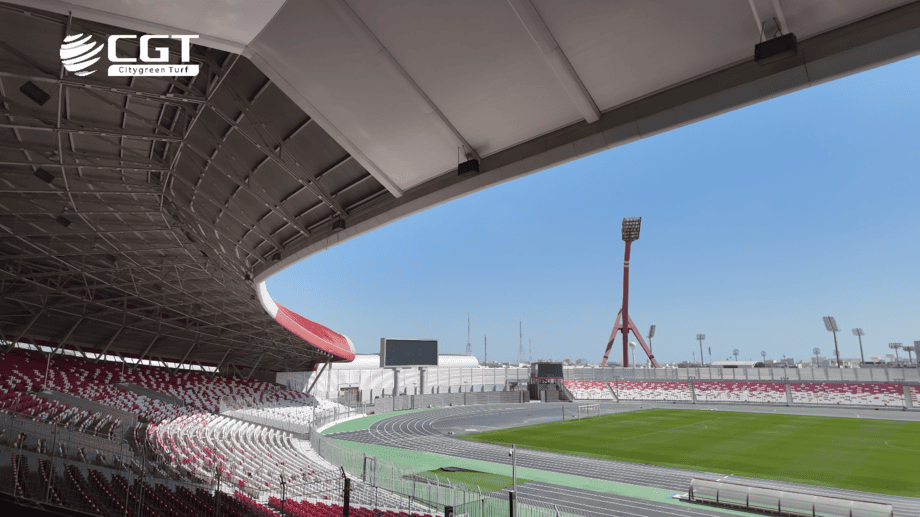
CGT integrated sports surface system project for the 2025 Asian Youth Games main venue in Bahrain
The project also took place during the hottest period of the year in the Middle East, which made material stability, installation control, site coordination, and construction efficiency especially important. Instead of treating the project as a simple product supply task, CGT worked through different stages of the project process, responding to site conditions, schedule pressure, and technical requirements as they appeared.
This type of experience shows why integrated planning matters. For stadium-level and event-driven facilities, the system must respond to intensive use, performance expectations, safety requirements, climate pressure, and strict delivery timelines. For school and community sports facilities, the focus may shift toward daily durability, easier maintenance, and long-term usability.
How System Coordination Reduces Project and Operation Risks
One of the biggest advantages of working with an integrated sports facility partner is risk control. In sports facility construction, risk does not only come from product quality. It can also come from unclear responsibility, weak communication, incomplete technical documents, delayed materials, installation errors, or maintenance plans that do not match real use.
When a developer works with multiple disconnected suppliers, gaps can easily appear between design, supply, installation, handover, and long-term operation. A facility may look complete on delivery day, but problems can appear later if the system is not designed for daily use, weather exposure, maintenance pressure, or intensive activity.
An integrated partner helps reduce these risks by keeping the full project connected. For football fields and larger sports surface projects, this may include turf specification, shock pad compatibility, infill recommendation, drainage planning, base coordination, installation control, maintenance guidance, and FIFA-related performance requirements. For school fields, public sports venues, and multi-sport complexes, it may also include usage planning, safety requirements, long-term durability, all-weather performance, and maintenance efficiency.
This connected approach helps developers think about operations before the project is completed. By matching the system with expected usage intensity, site conditions, user groups, and maintenance needs, an integrated sports facility partner can help reduce project uncertainty and improve long-term facility performance.
Certification and Standards Need System Thinking
For professional sports facilities, certification and testing standards are increasingly important. Developers, clubs, schools, and public-sector owners often need proof that the playing system can meet recognized performance expectations.
In football field construction, FIFA standards are a clear example. A FIFA-certified pitch is not certified because of one single product. The final performance depends on the complete system, including artificial turf, shock pad, infill, base quality, installation, and testing conditions.
This means developers need partners who understand system-based certification rather than only selling certified components. As a FIFA QUALITY PRO Certified Provider under the New FIFA Standard, CGT is able to support certified football field projects with a clearer understanding of system design, documentation, installation control, and performance testing expectations.
Our experience with FIFA Quality and FIFA Quality Pro projects supports this type of requirement. This capability is important because certification-related projects often require stricter documentation, tighter installation control, and better coordination between the supplier, installer, testing body, and project owner.
How Integrated Sports Facility Partners Add Value to Different Project Types
Different sports facility projects require different forms of integration. A professional stadium, a school football field, a public sports venue, and a multi-sport complex may all require sports surface systems, but their priorities are not the same.
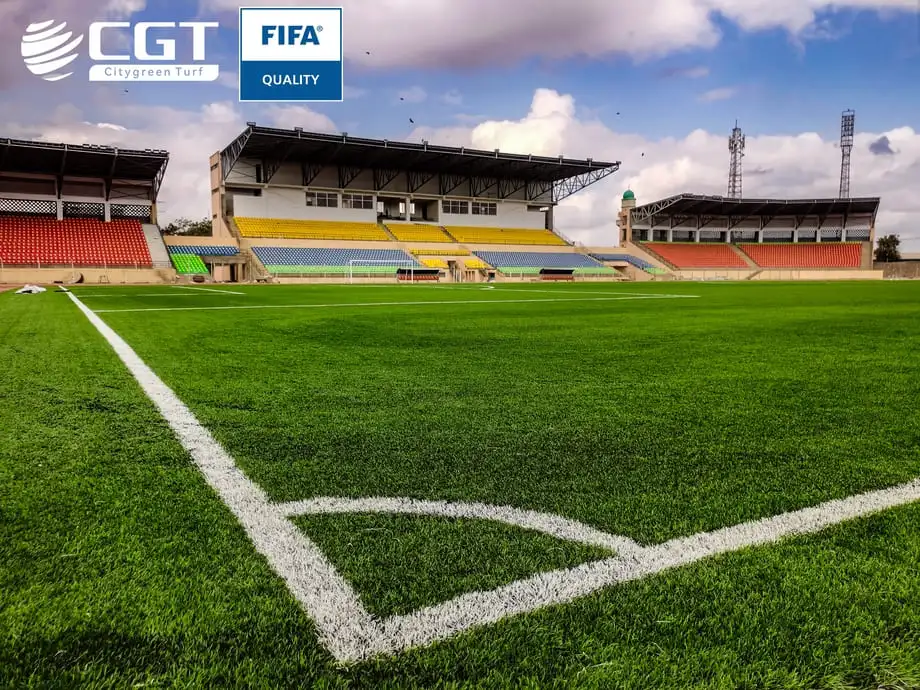
Dire Dawa International Stadium in Ethiopia with FIFA-certified football field by CityGreen Sports
For professional football fields, developers need systems that support consistent ball behavior, player safety, intensive training, certification requirements, and event-level performance. CityGreen Sports’s Dire Dawa International Stadium project in Ethiopia is a strong example. As Ethiopia’s first FIFA-certified football field, the venue quickly reached the level required to host international matches after completion. Beyond major events, the field also supports elite training and daily community use, showing how a well-planned football system can serve multiple performance and usage scenarios at the same time.
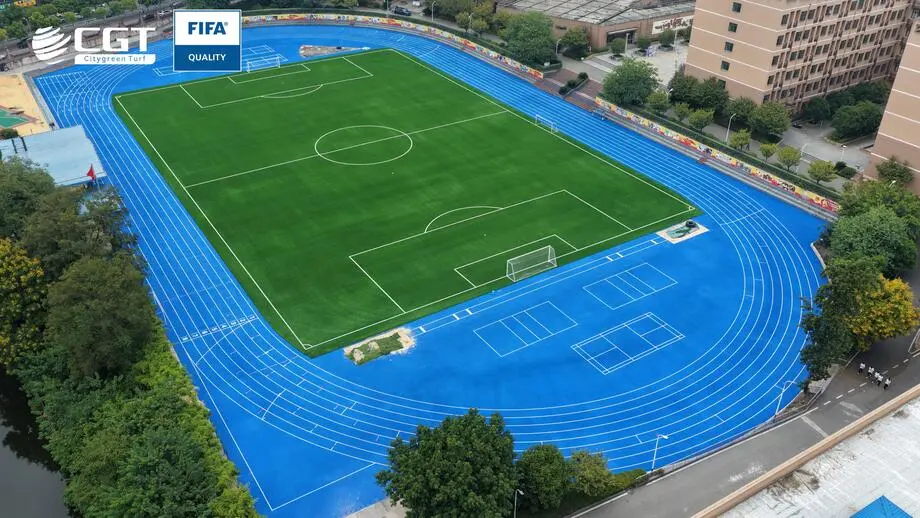
Chongqing middle school football field designed for safe, durable, and all-weather campus use
For school and education facilities, the project focus is different. Safety, durability, all-weather usability, and daily maintenance efficiency often become the main priorities. In a middle school project in Chongqing, CGT provided a football field system designed to meet FIFA Quality expectations while supporting frequent campus use. The field offers students a safer and more reliable space for daily sports activities, helping schools build a stronger foundation for physical education and the balanced development of students.
These projects show why different project types require different system planning. A professional stadium, a school football field, and a public sports facility may all need high-quality playing surfaces, but their priorities are not the same. An integrated sports facility partner can adjust the solution according to project scale, user group, performance requirements, site conditions, and long-term operation needs. This flexibility is one of the main reasons developers are moving beyond single-product supply and choosing partners who can support the full project logic.
Why Developers Are Moving Toward Long-Term Partnerships
Sports facility development is becoming more global, more technical, and more performance-driven. As a result, developers are placing greater value on long-term partners who understand both products and projects
A reliable integrated partner can help developers improve planning quality, reduce communication costs, manage delivery risk, control installation quality, and support long-term facility performance. This creates value before construction, during installation, and after handover.
For CGT, this is also the direction of our global sports infrastructure service. With experience in artificial turf systems, football field solutions, FIFA-standard projects, school sports facilities, community sports projects, public sports venues, and international delivery, we support developers with a more complete project perspective.
In today’s global sports facility market, the strongest partners are not only those who can supply materials. They are the partners who can help developers build facilities that perform reliably, operate efficiently, and create long-term value.
Conclusion
Global developers are choosing integrated sports facility partners because modern sports projects require more than isolated product supply. A successful facility depends on planning, system compatibility, installation quality, international coordination, risk control, certification awareness, and long-term operational performance.
Whether the project is a football field, school sports area, public sports venue, stadium, training facility, or multi-sport complex, developers need partners who can connect technical systems with real project needs.
CityGreen Sports supports global developers with integrated sports facility solutions covering artificial turf systems, football field construction, sports surface systems, technical coordination, international delivery, installation guidance, and long-term project support.