

Introduction
When planning an artificial football pitch, many project owners begin with the same question: “Do we need FIFA certification?” The answer depends on the facility’s real purpose—not simply on its name or budget.
A school pitch, a community football centre and a professional club training ground may all use artificial turf, but they serve very different players, match levels and operating models. The correct system should reflect how often the field will be used, which competitions it may host, whether certification is required by a league or tender, and how the facility may develop over time.
For some projects, a well-designed non-certified football turf system is the practical choice. For others, FIFA Quality provides the right balance of performance, durability and verification. FIFA Quality Pro is intended for projects with professional-level performance requirements or specific competition obligations.
This guide helps schools, community facilities and football clubs understand which level may suit their project—and why selecting the highest level is not always the right decision.
What Does FIFA Certification Mean for an Artificial Football Pitch?
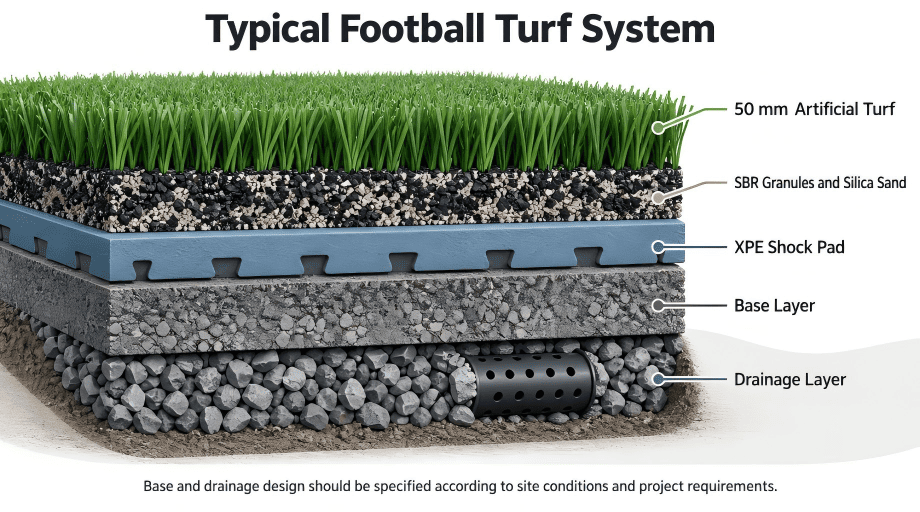
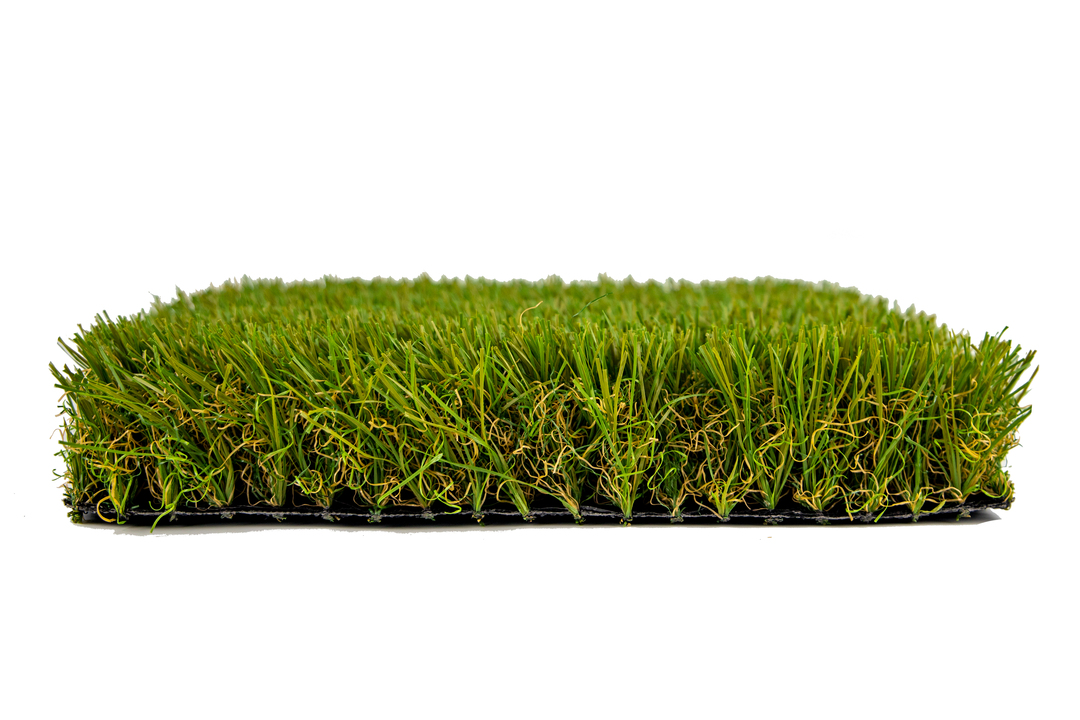
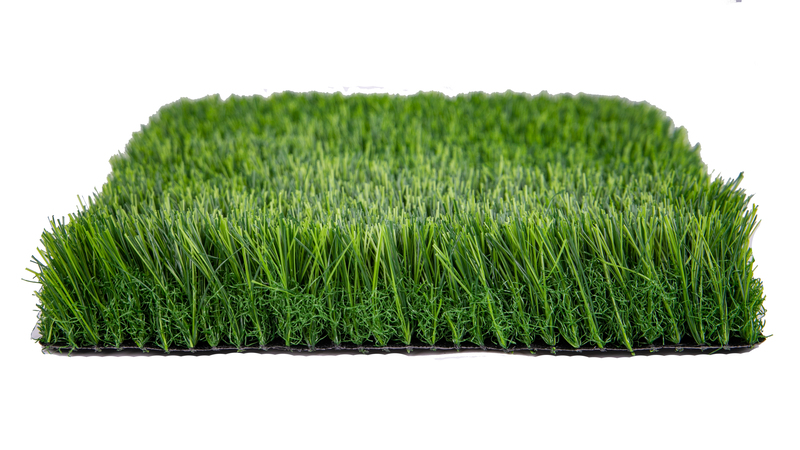
A FIFA football turf pitch is a complete system, from the playing surface to the base and drainage.
FIFA certification applies to the completed football turf installation, not to a single roll of artificial grass. The final playing surface is a system made up of the turf, infill, any shock pad, base construction, drainage, seams, line markings and installation workmanship.
This is important because every element affects the final result. A high-quality artificial grass product cannot deliver reliable performance if the base is uneven, drainage is inadequate, seams are poorly installed or infill is not correctly managed. The quality mark is therefore connected to how the complete pitch performs after construction.
For football turf, FIFA Quality is designed for community, amateur, grassroots and training use. FIFA Quality Pro is intended for professional-level football, where performance and safety requirements are more demanding. Both levels require the system to be tested; the difference lies in the performance criteria and the type of football the pitch is expected to support.
A FIFA-certified pitch should not be viewed simply as a marketing feature. It is a way to define performance expectations for the complete installation and to verify that the finished field meets the required standard.
The Five Questions to Answer Before Choosing a FIFA Level
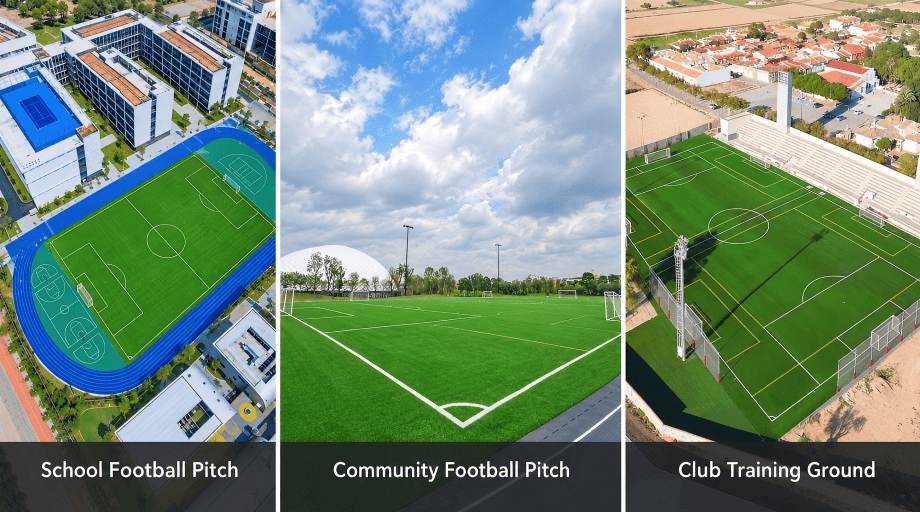
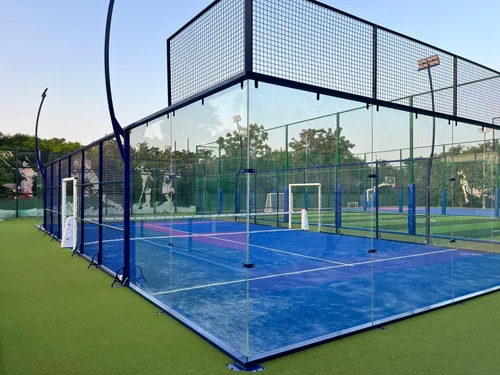
Football turf requirements vary by facility type, usage intensity and competition level.
What Type of Matches Will the Pitch Host?
The starting point is to define the football activities the pitch will support. A field used for PE classes, student training and informal school matches has a different brief from one hosting organised community leagues. A club facility may need to support academy training, senior-team training, amateur fixtures or professional matches.
If the project will host official competition, confirm the requirements with the relevant league, football association or tournament organiser. Some competitions may require a specific certification level, while others may only require the pitch to meet local technical or safety standards.
The key is to make this decision before the technical specification is finalised. A project should not be designed around a general claim of being “FIFA standard” when the owner has not confirmed what level of football the facility must actually serve.
Who Will Use the Field and How Often?
Usage intensity has a major influence on turf selection, infill management, drainage performance and maintenance needs.
A lightly used field may only support several training sessions each week. A community pitch could be used from early morning until late evening by schools, youth teams, amateur clubs and rental customers. A club training ground may receive structured use from several age groups throughout the week.
The project team should consider the expected weekly hours of use, the number of teams sharing the field, player age groups, training and match frequency, local weather conditions and whether the field will be commercially rented. These factors help determine how durable the system needs to be and what level of maintenance the owner must be prepared to provide.
High use alone does not automatically mean FIFA Quality Pro is required. However, it does mean that the pitch needs a robust complete system and a realistic maintenance plan.
Is FIFA Certification Required by the Owner, League, or Tender?
Certification requirements may come from different sources. A public tender may require FIFA Quality. A school authority may set a standard for long-term quality assurance. A league or national football association may require certification for certain matches. In other cases, the owner may simply want an independently tested benchmark for the final installation.
These requirements should be clarified in writing at the earliest stage of the project. If certification is mandatory, the tender documents should identify the required level, the testing process, the responsible parties and the acceptance criteria.
This protects the owner from a common problem: discovering after construction that the installed system does not meet the requirements of the intended competition or approval process.
What Is the Available Budget—Now and Over the Full Life Cycle?
The pitch budget should cover more than the initial supply and installation price. A football turf field is a long-term facility, and its value depends on how it performs over years of use.
The full-life budget may include civil works, drainage, artificial grass, infill, shock pad, installation, testing, routine maintenance, repairs and eventual replacement. A higher certification level may be justified when it supports a clear business, competition or operating need. If no such need exists, the same budget may create greater value when invested in better drainage, stronger baseworks, lighting or maintenance equipment.
The objective is not to choose the cheapest option or the most prestigious certification. It is to select the level that gives the project dependable performance and an achievable long-term operating cost.
What Is the Long-Term Plan for the Facility?
A pitch should be planned for how the facility will operate in the coming years, not only for opening day.
A school may initially use the field for PE and school teams, then later open it for community use. A community project may begin with public access but develop into a league venue or rental business. A grassroots club may expand its academy, increase its training schedule or move into higher-level competition.
These plans do not always mean that a project needs FIFA Quality Pro immediately. They do mean that the owner should understand what future growth could require. A sensible project brief allows for that development without forcing the facility to pay for requirements it does not yet need.
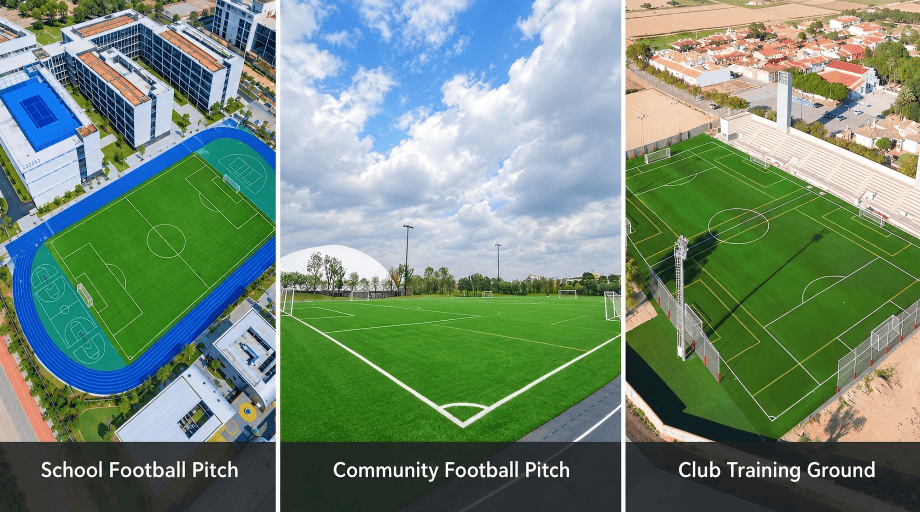
FIFA Certification for School Football Pitches
School pitches must usually balance safety, budget, durability and flexible daily use. They may support PE lessons, after-school football, school teams, recreational activity and occasional inter-school matches. The correct decision depends on how central football is to the school’s sports programme.
For a school focused mainly on PE and recreational use, a non-certified football turf system may be sufficient. The priority should be a safe and durable surface, appropriate drainage, reliable installation and a practical maintenance plan. Non-certified does not mean that quality can be ignored. It means the project is not required to pursue formal FIFA testing for its intended use.
FIFA Quality can be a suitable option for schools with high use, strong football programmes or regular competitive fixtures. It may also make sense when the school shares the facility with external clubs, has a public procurement requirement or wants a clearer quality benchmark for a major long-term investment.
FIFA Quality Pro should usually be reserved for schools with a genuine professional-level requirement, such as a facility connected to an elite academy or a venue hosting high-level official competition. For most schools, a well-designed system with good drainage, safe performance and proper maintenance will matter more than paying for a level of certification the facility will not use.
FIFA Certification for Community Football Pitches
Community pitches often face the highest and most varied usage. They may host youth football, adult leagues, school activities, casual bookings, coaching programmes and weekend tournaments. In this environment, availability and durability can be just as important as the initial playing performance.
A community facility should first define its operating model. If it will run daily bookings and regular leagues, the pitch needs a system capable of handling sustained use. This includes appropriate turf construction, a stable base, effective drainage and consistent maintenance. The best field on opening day will not remain reliable without routine grooming, cleaning, infill management and repairs.
FIFA Quality is often a good fit for community facilities that host organised amateur or regional football. It can provide a clear, independently tested reference point for the finished pitch and help establish confidence with users, clubs and public-sector stakeholders.
However, FIFA Quality Pro is not automatically necessary for a community project. If the facility will not host professional or organiser-regulated elite competition, the additional budget may be more useful when allocated to long-term durability and operation. Reliable lighting, quality drainage, durable surrounding infrastructure and maintenance resources can all have a greater day-to-day impact on a busy community venue.
The best community pitch is not necessarily the one with the highest label. It is the one that remains safe, playable and available through years of intensive use.
FIFA Certification for Football Clubs and Training Grounds
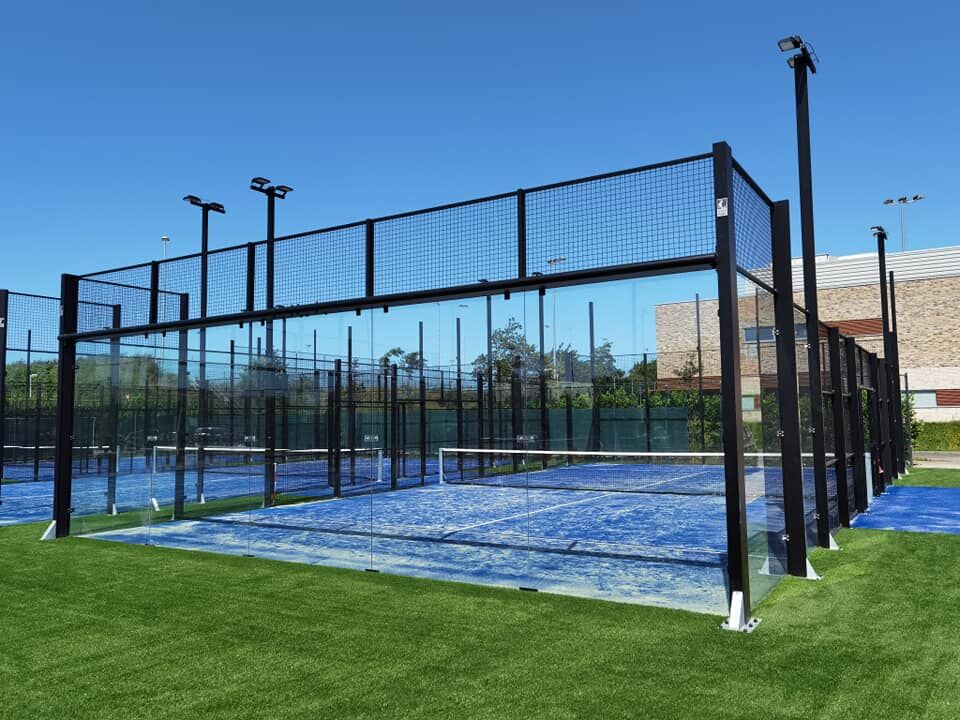
Football clubs need to align the pitch specification with their sporting level, training demands and long-term development plans.
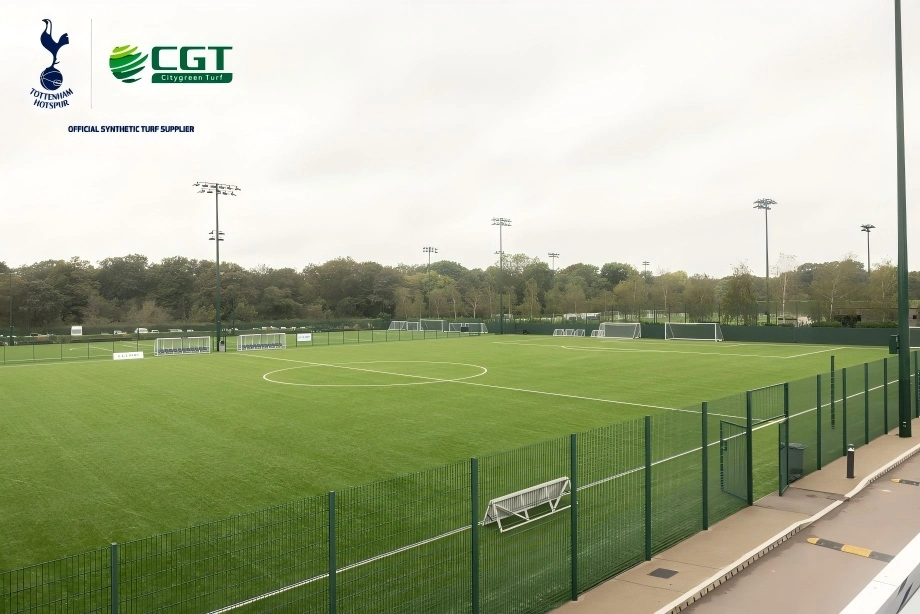
CGT delivered a FIFA Quality Pro-certified football training pitch for Tottenham Hotspur.
For grassroots and amateur clubs, the field may support youth teams, senior training, weekend fixtures and community rentals. FIFA Quality can provide a strong balance of playing performance, durability and long-term value when a club needs a tested, football-specific system for regular use. Before defining the specification, however, the club should confirm the requirements of its own league and football association. A local amateur competition, an academy programme and a professional competition may each require a different standard.
Professional clubs and elite training centres face a different set of expectations. Their pitches may need to support intensive daily training, demanding player-performance requirements and, in some cases, official competition. Where a league, tournament organiser or club performance brief requires it, FIFA Quality Pro may be the appropriate target. At this level, certification cannot be treated as a final-stage label; the system design, baseworks, drainage, installation quality, field testing and maintenance plan must be coordinated from the beginning of the project.
A practical example is CGT's work for Tottenham Hotspur. CGT delivered a new football training pitch that achieved FIFA Quality Pro certification, demonstrating the importance of treating the entire installation as one controlled system rather than focusing only on the artificial turf product. For an elite club, the objective is not simply to install a pitch that looks professional on day one, but to create a surface that can deliver consistent performance under sustained training use.
For clubs with ambitious academy plans, the right decision should also consider future demand. A club may not need FIFA Quality Pro today, but it should understand whether rising usage, higher-level competition or academy expansion could change the required standard in the coming years. The best investment is a system that meets current needs while giving the club a realistic path for growth.
For more information: CGT Delivers New FIFA Quality Pro Pitch for Tottenham Hotspur.
Quick Comparison: Which FIFA Level Fits Your Facility?
|
Facility type |
Typical use |
Potential fit |
Main decision factors |
|
School pitch |
PE, school training and internal matches |
Non-certified or FIFA Quality |
Safety, budget, usage frequency and school competition requirements |
|
Community pitch |
Public use, rental bookings and local leagues |
Non-certified or FIFA Quality |
Usage intensity, durability, drainage, maintenance and league requirements |
|
Grassroots or amateur club |
Youth training, club matches and local competition |
FIFA Quality |
Competition rules, consistency of performance and club growth plans |
|
Professional club or elite training centre |
Professional training and high-level matches |
FIFA Quality or FIFA Quality Pro |
Competition regulations, player needs and project quality control |
|
International or organiser-regulated venue |
Official international or specified professional matches |
Confirm with the organiser |
Mandatory regulations, testing requirements and certification timing |
This comparison is intended as a planning guide. The final decision should always be checked against the relevant competition rules, tender requirements and local football authority guidance.
Common Mistakes When Selecting FIFA Certification
One common mistake is choosing the highest certification level simply because it sounds more impressive. A higher level does not automatically create a better outcome if the facility will never host the type of football it is designed to support.
Another mistake is treating certification as a claim about artificial grass alone. The final result depends on the complete system. Poor baseworks, inadequate drainage, incorrect infill levels or weak installation practices can undermine the field’s performance, regardless of the turf product selected.
Projects also run into difficulty when certification is considered only after construction. If FIFA testing is required, the target level and testing process should be defined before installation starts. This gives the supplier, contractor and owner clear responsibilities and reduces the risk of costly changes later.
Finally, many owners underestimate maintenance. Certification does not remove the need for regular care. A football turf system needs ongoing attention to protect safety, playing performance, appearance and service life.
How to Choose the Right FIFA Turf System for Your Facility
Once the appropriate certification level is clear, the next step is to select the complete football turf system. The decision should not be based on artificial grass alone. It should consider the relationship between turf construction, infill, shock pad where required, baseworks, drainage, installation controls and the maintenance plan that will protect the pitch after handover.
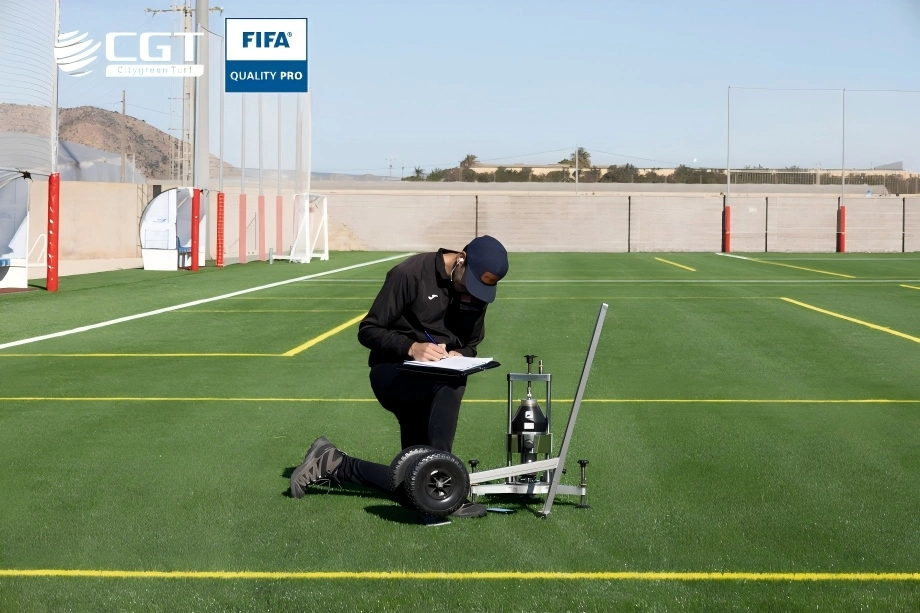
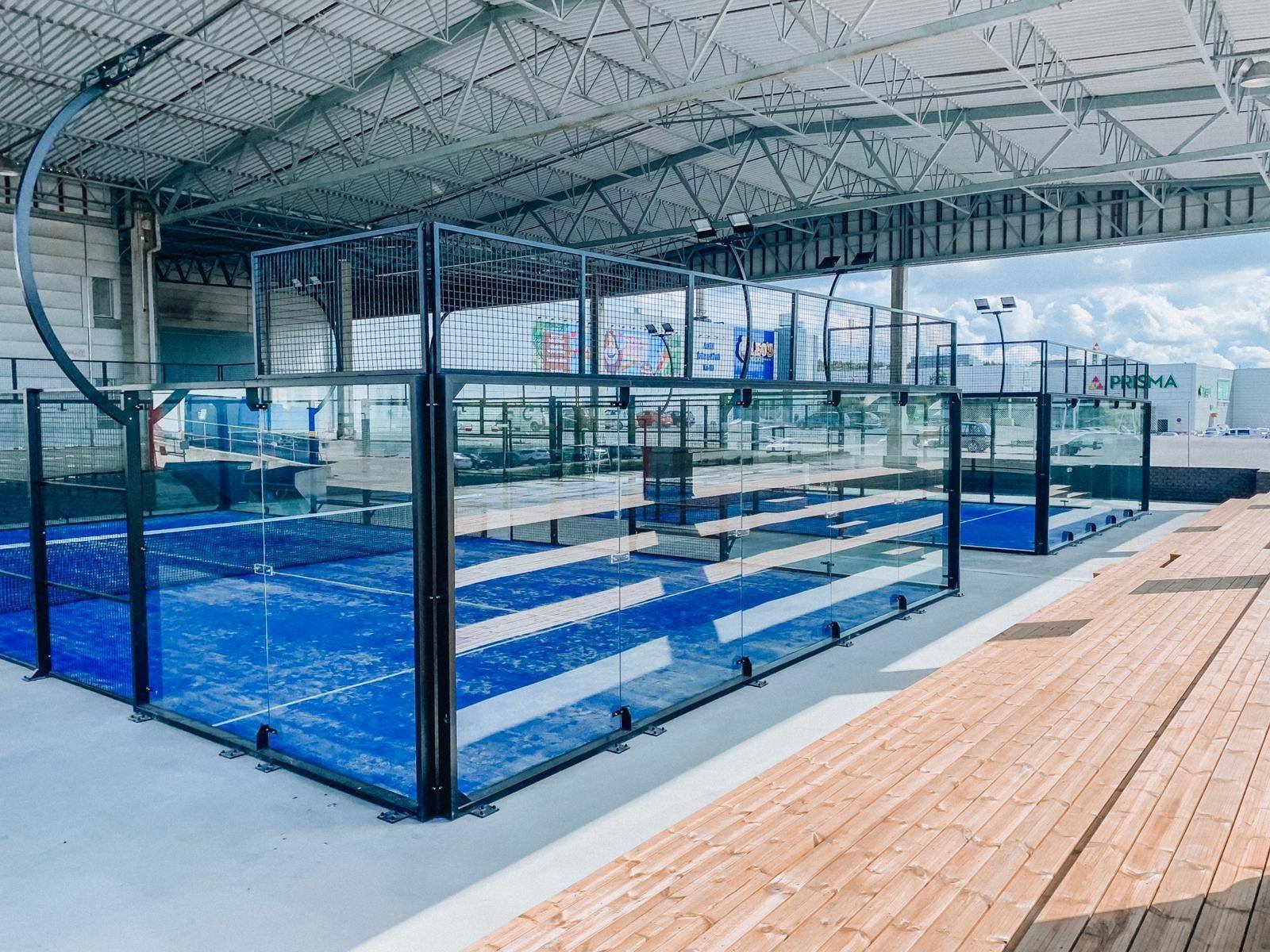
From system design and installation to quality control, every stage affects final pitch performance.
This is where supplier capability matters. A reliable FIFA turf partner should be able to assess the project’s intended use, translate that use into a clear system specification and take responsibility for how the different layers perform together. The supplier should also be able to explain the certification pathway where it is required, including approved system selection, installation quality control, testing arrangements and the documentation needed for project acceptance.
CGT supports football turf projects as an integrated system provider rather than only a grass supplier. As a FIFA licensee, CGT has experience with FIFA-level football turf systems and certified project delivery, including FIFA Quality Pro installations. This experience helps project owners connect technical requirements with practical decisions around turf selection, drainage, shock absorption, installation and long-term maintenance.
For schools, the focus may be on safety, durability and manageable operating costs. For community pitches, the system must withstand intensive use while remaining consistently playable. For football clubs, the specification may need to support academy growth, structured training and competition requirements. In each case, the right solution begins with the facility’s real operating needs and ends with a complete system designed to meet them.
For further guidance, read: How to Choose the Right FIFA Football Turf System for Your Project.
Conclusion
The right FIFA level is not the highest level available. It is the level that matches the people who will use the field, the matches it will host, the owner’s budget and the facility’s long-term plan.
For many schools and community projects, a durable, safe and well-maintained football turf system will be the right answer. For high-use amateur clubs, FIFA Quality may provide the right balance between performance and long-term value. For professional or organiser-regulated venues, FIFA Quality Pro may be necessary.
Before selecting a system, define the project’s use, competition goals, expected weekly hours and future development plan. This will make it easier to choose a football turf system that performs reliably throughout its life cycle.