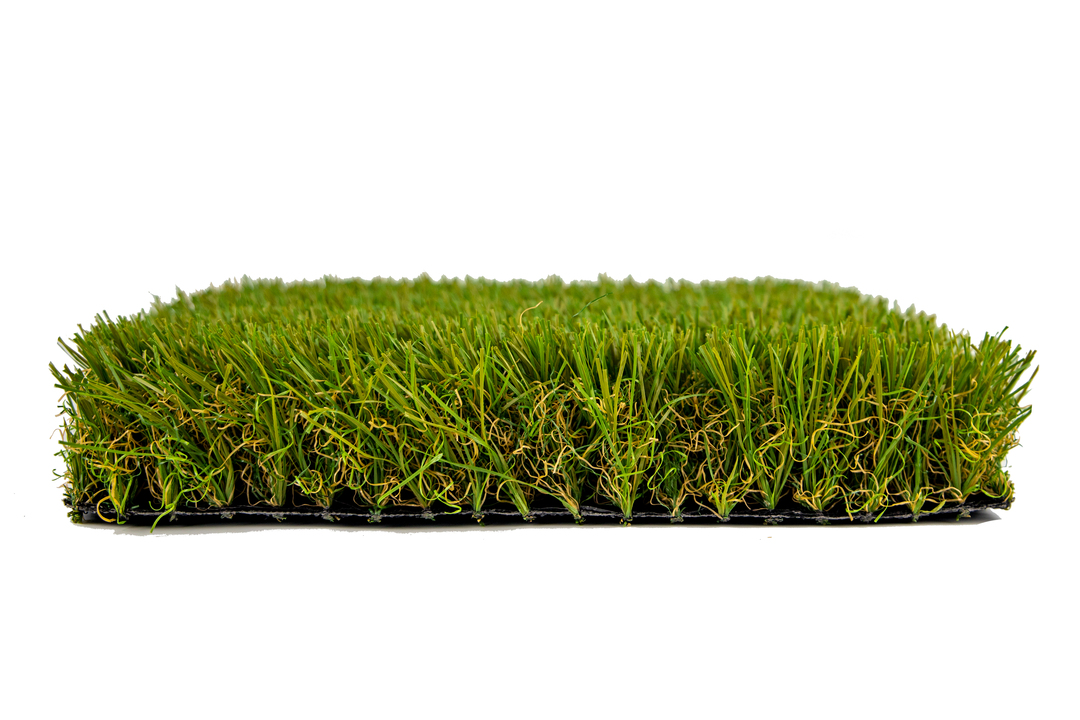

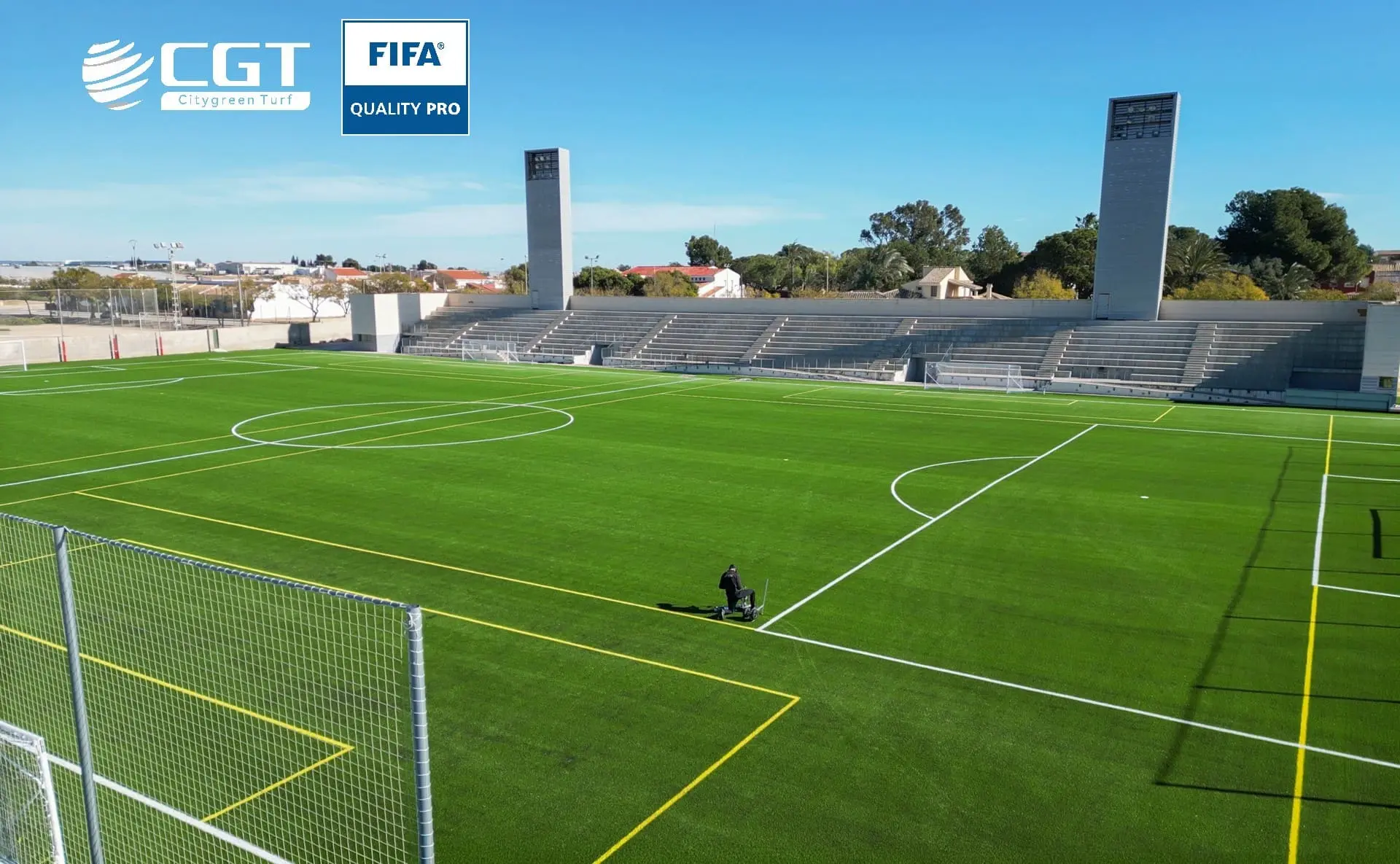
When planning a modern football facility, the turf is no longer just "plastic grass." It is a sophisticated one-stop sports system comprising the sub-base, shock pad, infill, and the synthetic turf itself, as we explained in our previous guide on FIFA Football Turf system design and construction principles.
But with three distinct categories—FIFA Basic, FIFA Quality, and FIFA Quality Pro—which certification should you aim for? This guide breaks down the technical differences and provides a strategic road-map for your investment.
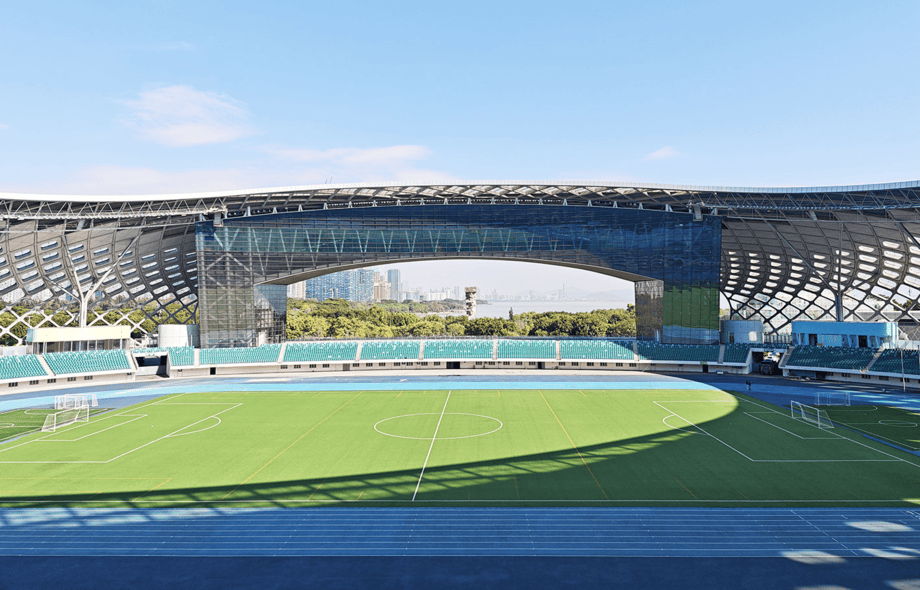
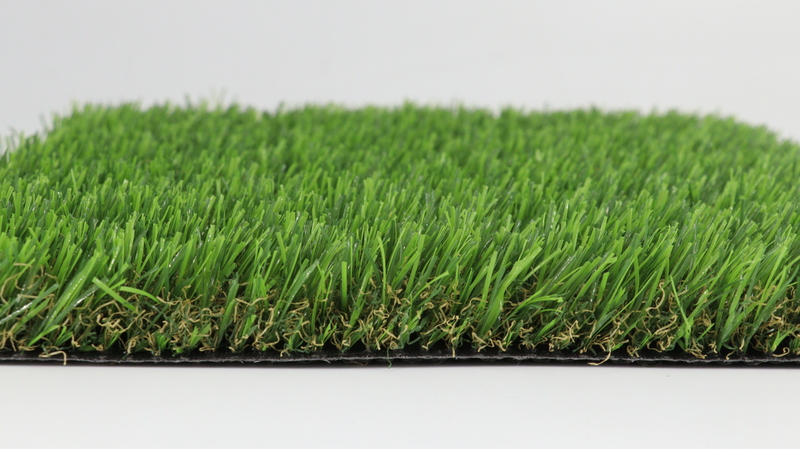
Modern FIFA Quality artificial football turf system facility showcasing professional multi-layer construction
Understanding the FIFA Certification Hierarchy
The FIFA Quality Programme ensures that football turf surfaces replicate the playing performance of high-quality natural grass while providing safety and durability. A pitch isn't just certified based on the product; it is certified as a complete installed system.
FIFA Basic: Replaced the former IMS (International Match Standard) in 2020. It focuses on cost-effective durability and safety.
FIFA Quality: Designed for community and municipal use with high traffic.
FIFA Quality Pro: The pinnacle of performance, designed for professional-level play and international competitions.
Core Differences: At a Glance
The primary distinction lies in the balance between Performance and Durability.
|
Feature |
FIFA Basic |
FIFA Quality |
FIFA Quality Pro |
|
Primary Use |
Schools / Community |
Amateur Clubs / Training |
Professional / Stadiums |
|
Usage Intensity |
High (40-60+ hours/week) |
Moderate (40-60 hours/week) |
Low (Up to 20 hours/week) |
|
Testing Tolerance |
Standard |
Strict |
Tightest / Elite |
|
Certification Validity |
3 Years |
3 Years |
1 Year |
Technical Testing: How the Systems Differ
To earn these marks, a system must pass rigorous laboratory and field tests, following standardized FIFA testing procedures that simulate real match conditions and on-field performance.
The requirements for FIFA Quality Pro are significantly more stringent, aiming to replicate the feel and performance of elite natural grass surfaces.
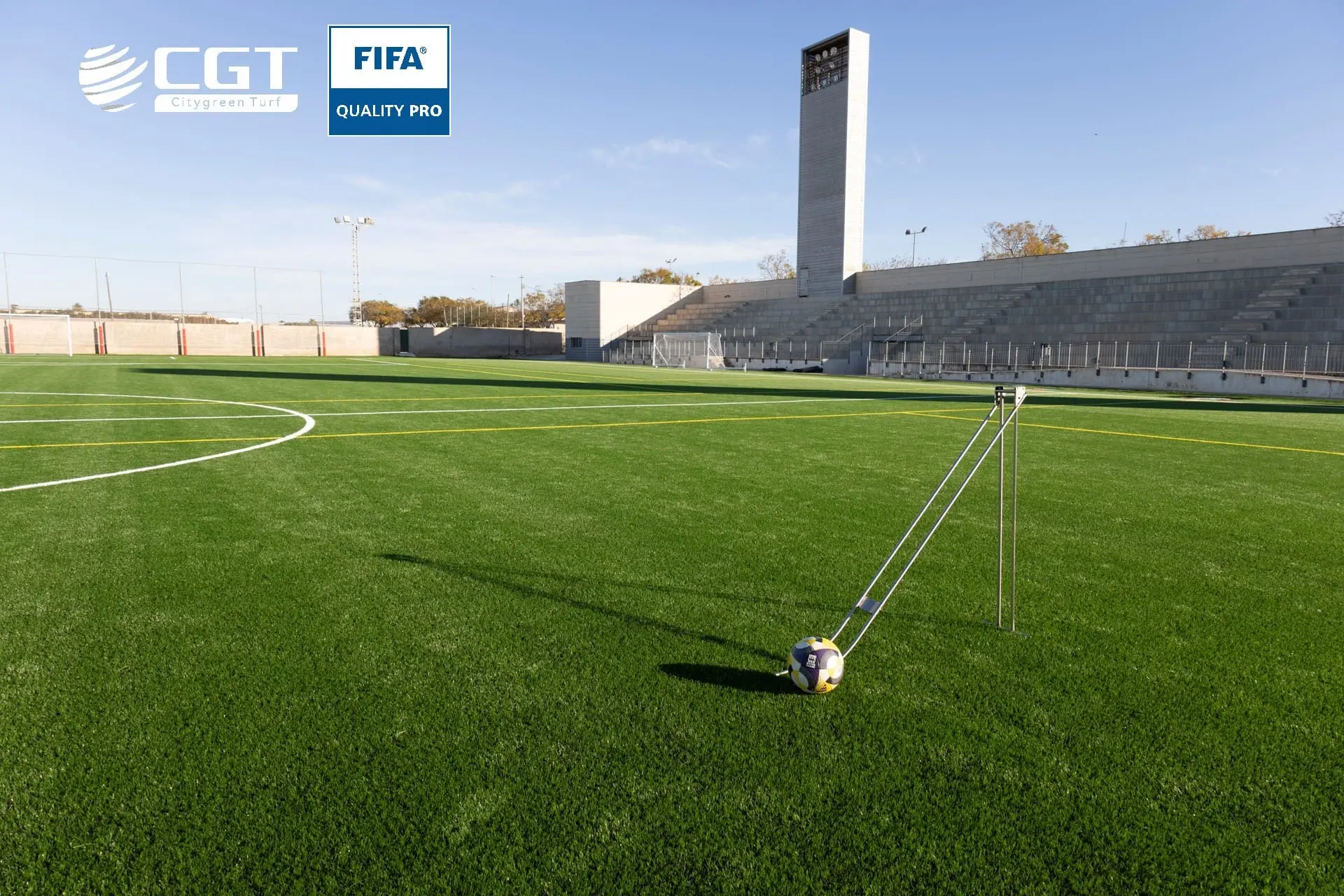
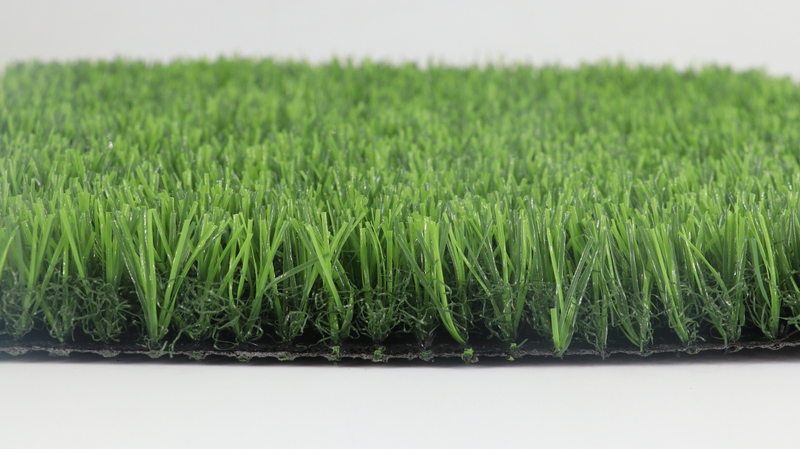
FIFA Quality football turf system field testing showing ball roll performance measurement
Ball Rebound & Roll: FIFA Quality Pro requires a more consistent ball response. For instance, the vertical ball rebound must stay within 0.6m – 0.85m, whereas FIFA Quality allows up to 1.0m. Ball roll distance is also more tightly controlled under FIFA Quality Pro to ensure consistent ball speed across the surface.
Shock Absorption: All certification levels require defined ranges of shock absorption, but FIFA Quality Pro systems must maintain this performance consistently even after extended simulated wear.
Skin Friction & Abrasion: Stricter limits are applied at the Pro level to control skin friction and abrasion, improving player-surface interaction during sliding movements.
Selection Guide: Which System Fits Your Project?
Choosing the right system depends on your project objectives, usage profile, and budget allocation—not just the certification level.
Option A: Schools & Community Projects → FIFA Basic
Goal: Safe, cost-effective solution for multi-purpose use
Why:
School and community pitches typically experience continuous, non-specialized use with limited maintenance resources. FIFA Basic systems are engineered to provide reliable safety and functional performance under general foot traffic, while keeping initial investment under control. They prioritize durability, accessibility, and ease of maintenance over advanced playing characteristics, making them a practical solution for projects where budget efficiency and broad usability are the primary concerns.
Option B: Amateur Clubs & Training Centers → FIFA Quality
Goal: Consistent performance for training and semi-competitive matches
Why:
Training environments require a higher level of surface consistency, ball behavior, and player comfort compared to community fields. FIFA Quality systems are designed to meet these demands by delivering more controlled and predictable performance while still maintaining strong durability under frequent use. This makes them particularly suitable for academies, clubs, and commercial sports facilities, where the pitch must support intensive training schedules without the cost and operational requirements associated with top-tier professional standards.
Option C: Professional Stadiums → FIFA Quality Pro
Goal: Elite performance for top-tier leagues.
Why:
FIFA Quality Pro systems are built to satisfy the most stringent performance criteria within the FIFA framework, ensuring optimal ball-surface interaction, surface uniformity, and player response. These systems are typically specified for professional stadiums and top-level matches, where performance consistency is critical. To maintain these high standards over time, they require a well-managed usage schedule and a consistent maintenance regime, making them best suited for controlled environments rather than unrestricted public access.
Frequency of Use:
High usage (e.g., 8–12 hours per day) demands a more durable and stable system design, but it does not necessarily require FIFA Quality Pro certification. For most intensive training environments, FIFA Quality provides the optimal balance between durability and cost-efficiency.
Budget vs. Performance:
FIFA Quality Pro systems are engineered to meet the most stringent performance standards for professional matches. This often involves more advanced system configurations, which typically result in higher initial investment compared to FIFA Quality systems.
Why Choose Our Integrated Sports System Solutions?
We deliver more than individual components—we provide fully engineered football turf systems designed to meet FIFA performance standards.
Full-System Integration
We design and coordinate the entire system—including turf, infill, shockpad, and base structure—to work as a unified solution. Each configuration is engineered to meet FIFA testing requirements under real installation conditions, ensuring consistent on-field performance.
Performance-Driven Customization
Every project is developed based on its intended certification level and usage profile. Instead of standard configurations, we tailor key system parameters—such as fiber specification, pile structure, and shock absorption layers—to achieve the required balance between durability, playability, and cost.
Proven Ability Under the Latest FIFA Standards
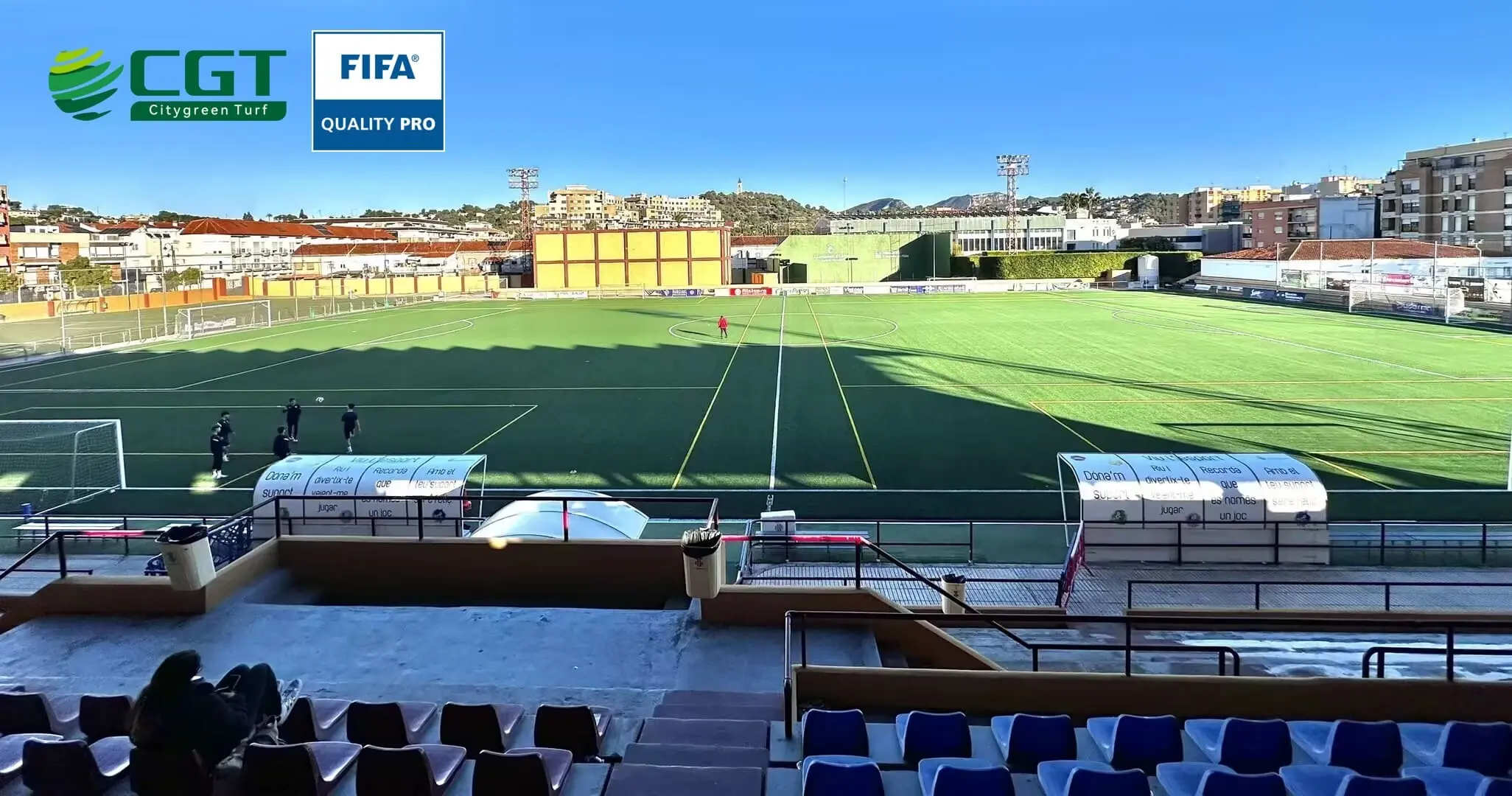
Campo de Fútbol de Balsicas, Spain
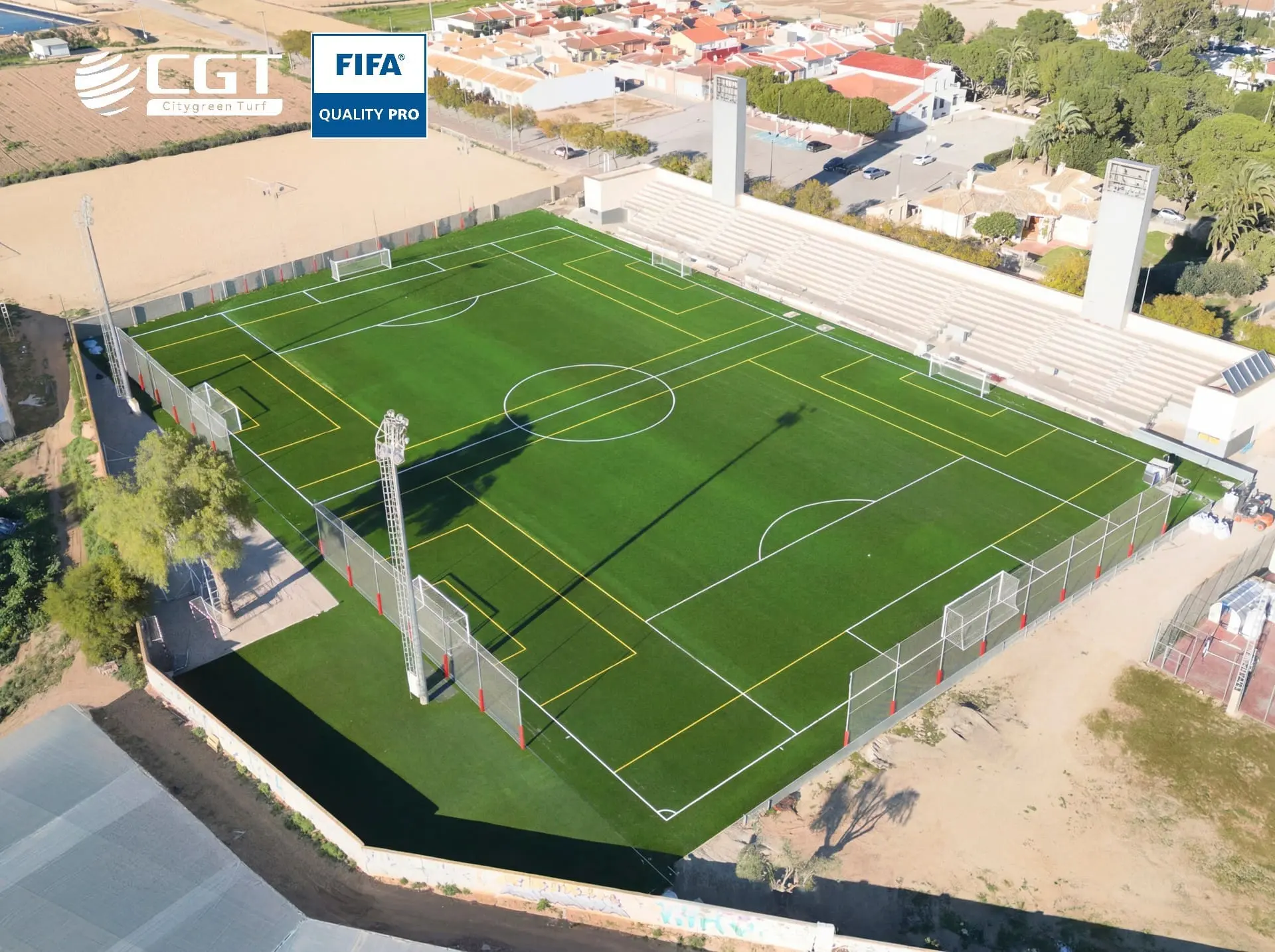
Campo de Fútbol Municipal Dolores de Pacheco, Spain
Our capabilities are validated through real-world delivery. In Spain, we successfully completed and achieved FIFA Quality Pro certification for two professional football pitches under the latest TM-Football-Turf-2024 standard—placing us among the early adopters globally to deliver multiple certified fields under this new framework.
This demonstrates our ability to execute full-system solutions that meet increasingly stringent requirements for performance, durability, and system integration.
Global Project Expertise
With projects across the world, we understand how to adapt system design to different climates, drainage conditions, and construction standards—ensuring reliable performance across diverse environments.
Conclusion
Selecting between FIFA Basic, FIFA Quality, and FIFA Quality Pro is ultimately about aligning performance expectations with real-world usage and budget constraints.
FIFA Basic is ideal for community and educational facilities where accessibility and cost-efficiency are key
FIFA Quality offers the best balance for high-frequency training and commercial use
FIFA Quality Pro is the right choice when elite-level match performance is the priority
The right system is not the highest specification but the one that best fits your project's operational reality.