

Introduction
Over the past few years, padel has evolved from a fast-growing niche sport into one of the most commercially attractive sectors in the global sports facility industry. Across Europe, the Middle East, Asia, and Latin America, new clubs continue to emerge as developers, operators, and investors recognize the growing demand for social and accessible sports experiences.
But in 2026, the conversation is changing.
Many investors are no longer asking whether padel is growing. Instead, they are asking more practical questions:
- Is the market becoming oversaturated?
- Is it still possible to enter the industry profitably?
- What types of padel clubs actually generate sustainable revenue?
- How important are court quality and player experience to long-term success?
As the industry matures, padel court investment is shifting from a “growth opportunity” into a more professionalized commercial model. The projects that succeed in 2026 are increasingly the ones built around operational efficiency, player retention, and long-term facility performance.
So, is padel court investment still profitable in 2026?
In many markets, the answer is yes — but profitability now depends far more on execution quality than simply entering early.
Why Padel Continues to Attract Investors in 2026
Lower Land Requirement Compared to Tennis
One of padel's biggest commercial advantages is spatial efficiency.
A standard padel court requires significantly less land than a traditional tennis court, allowing developers to fit multiple courts within relatively compact spaces. This improves land utilization and makes padel more adaptable to urban developments, commercial complexes, rooftops, resorts, and mixed-use real estate projects.
For investors operating in high land-cost cities, this becomes a major economic advantage.
Higher Court Usage Frequency
Padel courts generally achieve higher daily occupancy rates than many traditional sports facilities.
Because matches are shorter, beginner-friendly, and less physically demanding than tennis, players are more likely to book courts repeatedly throughout the week. Evening sessions, after-work games, and weekend social bookings often create strong utilization during peak commercial hours.
Higher court turnover directly improves revenue potential per square meter.
Faster Community Formation
Unlike many competitive sports, padel is highly social by nature.
The sport naturally encourages:
- after-work social interaction
- beginner participation
- mixed-gender play
- casual competition
- community-driven engagement
This creates stronger player retention and more consistent booking activity.
In practice, many successful padel clubs operate less like traditional sports venues and more like modern social lifestyle spaces.
Expansion Beyond Traditional Sports Facilities
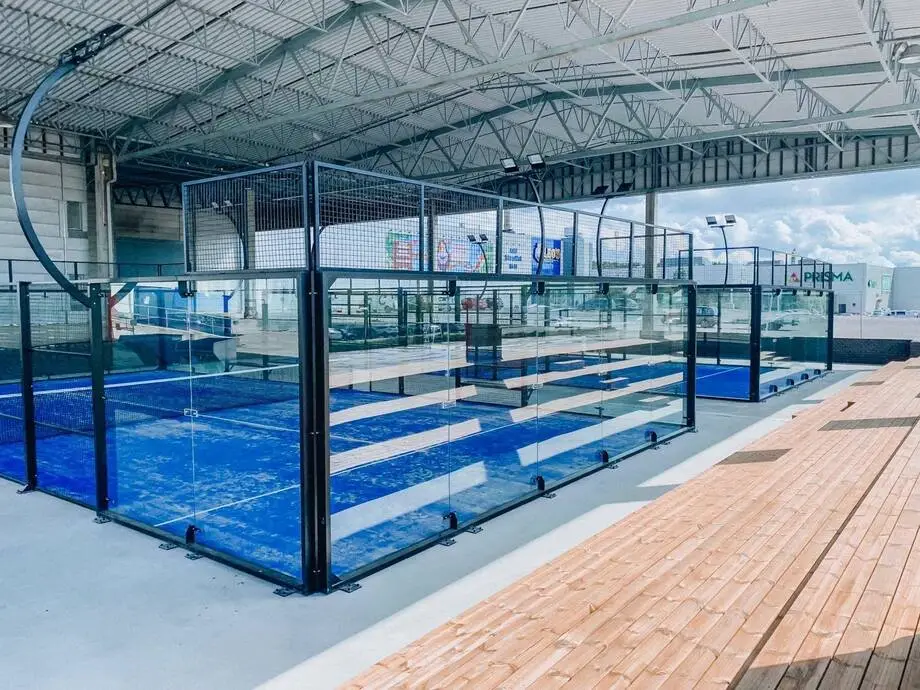
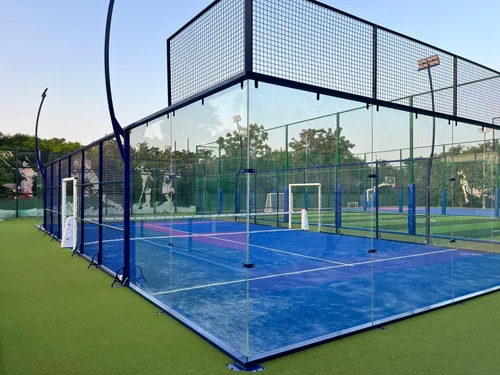
Modern padel court in a commercial resort environment showcasing the sport's global expansion
Padel is no longer limited to standalone sports clubs.
In 2026, padel courts are increasingly integrated into:
- commercial real estate developments
- luxury residential communities
- resorts and hospitality projects
- sports entertainment complexes
- wellness-focused developments
This broader adoption signals that the industry is moving beyond “sports trend” status and becoming part of a larger commercial infrastructure planning.
How Padel Clubs Actually Make Money
Many first-time investors underestimate how diversified a successful padel business can become.
Court rental is only one revenue layer.
Court Rental
Hourly court bookings remain the core revenue source for most clubs. Prime-time occupancy is often the primary driver of financial performance.
Membership Programs
Monthly memberships create recurring revenue and improve customer retention. Members typically generate more stable long-term cash flow than casual users.
Coaching & Training
Private coaching, academy programs, and youth training can become highly profitable operational segments, especially in developing padel markets where player education demand is rising.
Tournaments & Events
Competitive events, amateur leagues, and corporate tournaments help clubs increase visibility while driving secondary spending across the venue.
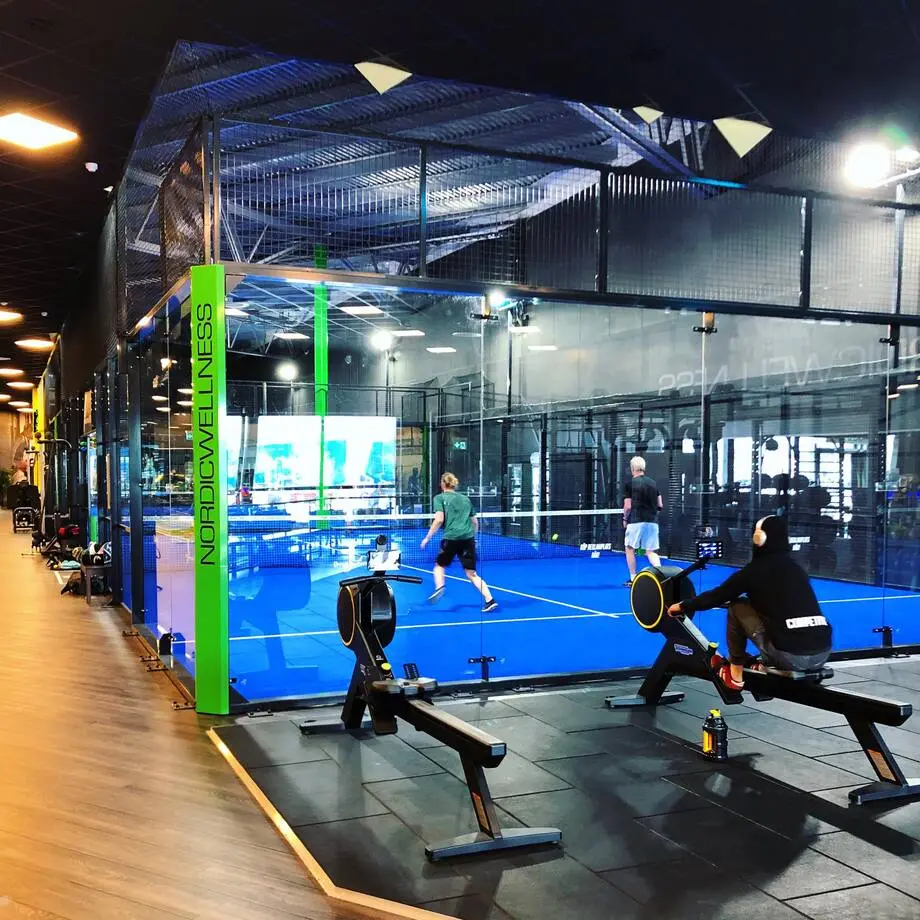
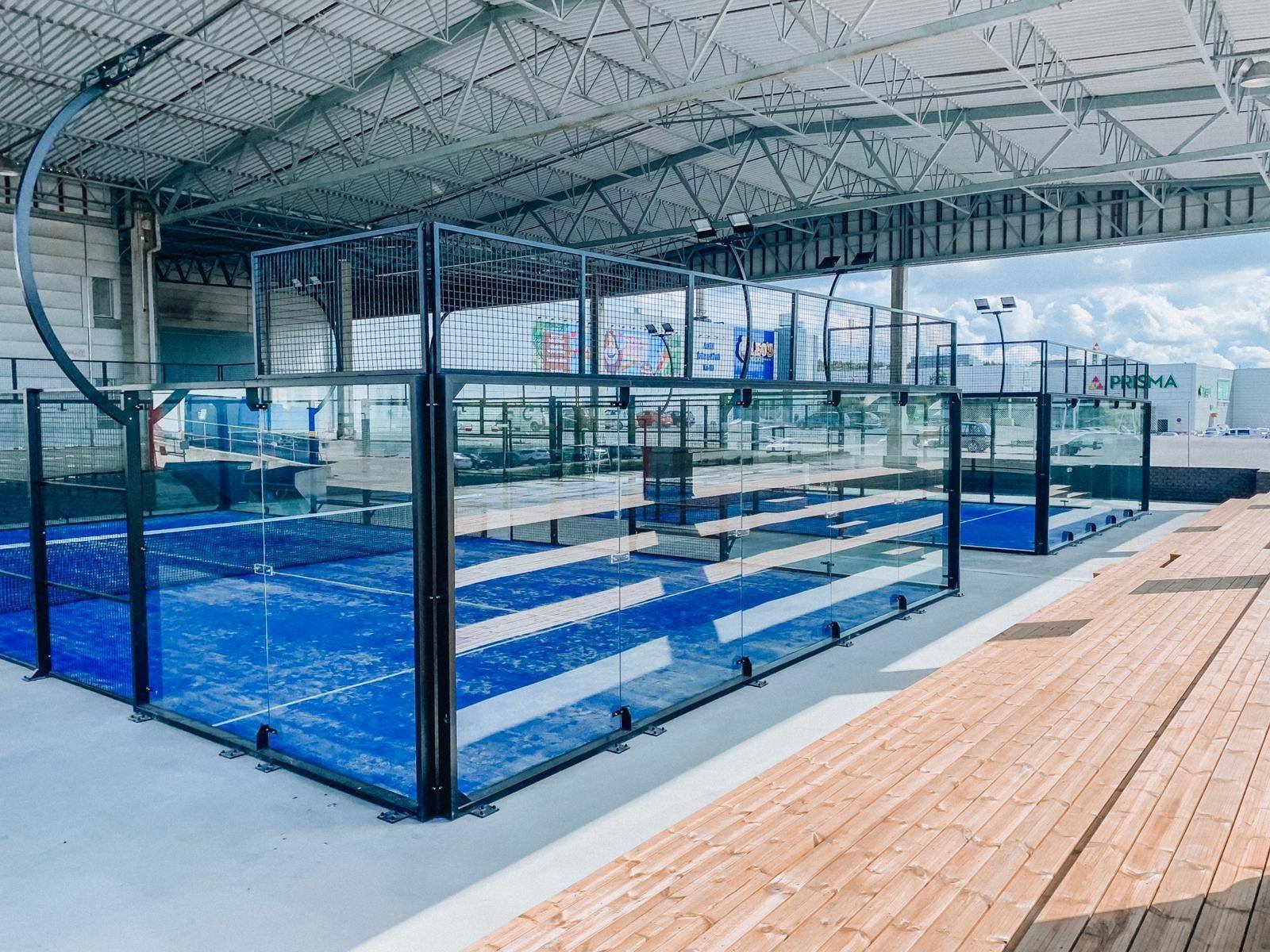
Corporate and recreational padel event held in a fitness facility showing social sports engagement
Food & Beverage
Many profitable clubs treat café and lounge areas as critical components of the business model. Because padel is socially driven, players often stay before and after matches.
Retail & Equipment
Racket sales, apparel, accessories, grips, balls, and equipment rentals create additional monetization opportunities.
Ultimately, mature padel clubs operate less like pure sports facilities and more like hybrid social-commercial ecosystems.
Main Costs of a Padel Court Investment
Initial Construction Costs
Initial investment depends heavily on:
- number of courts
- steel structure specifications
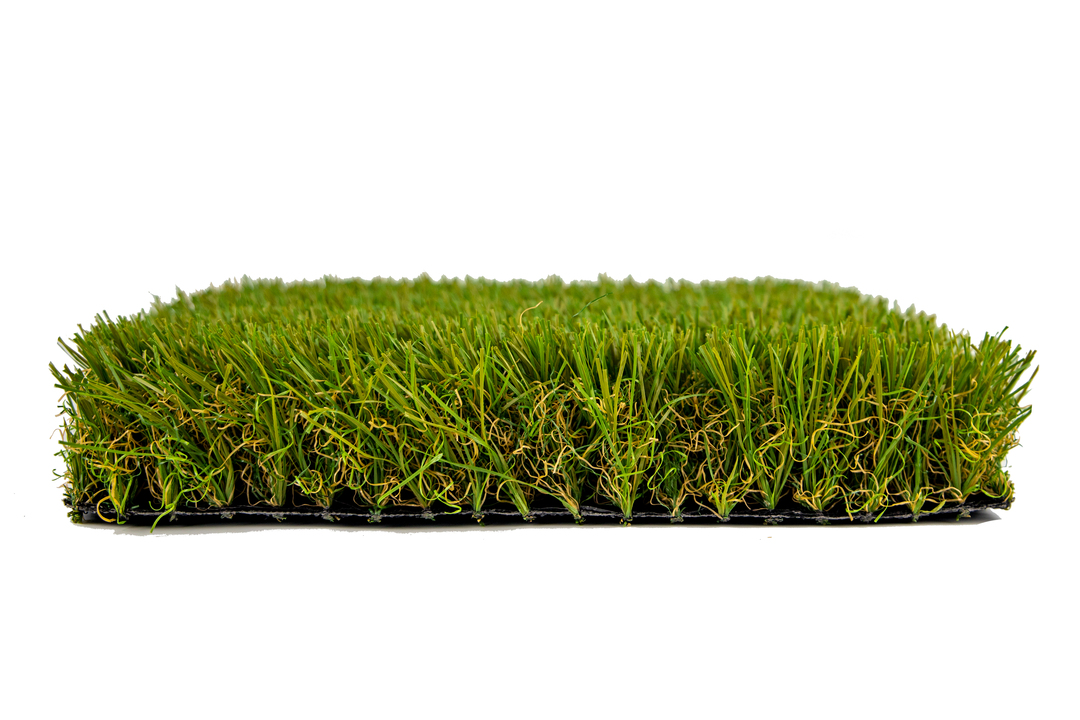
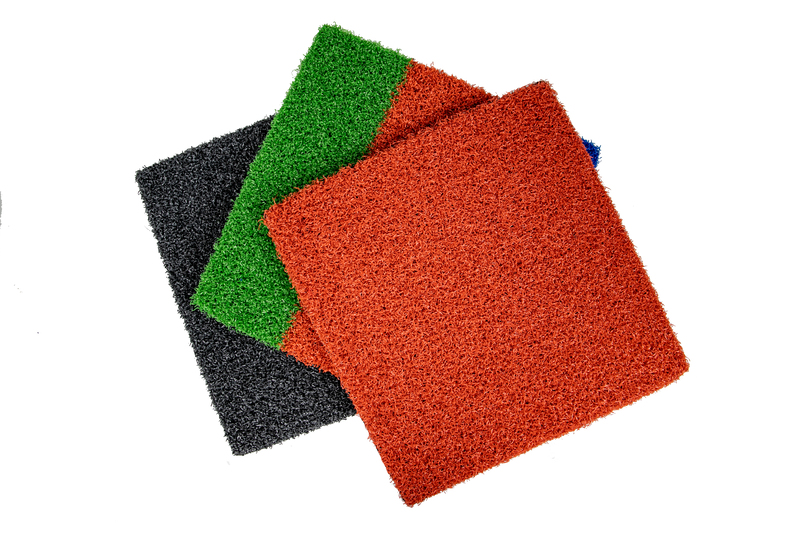
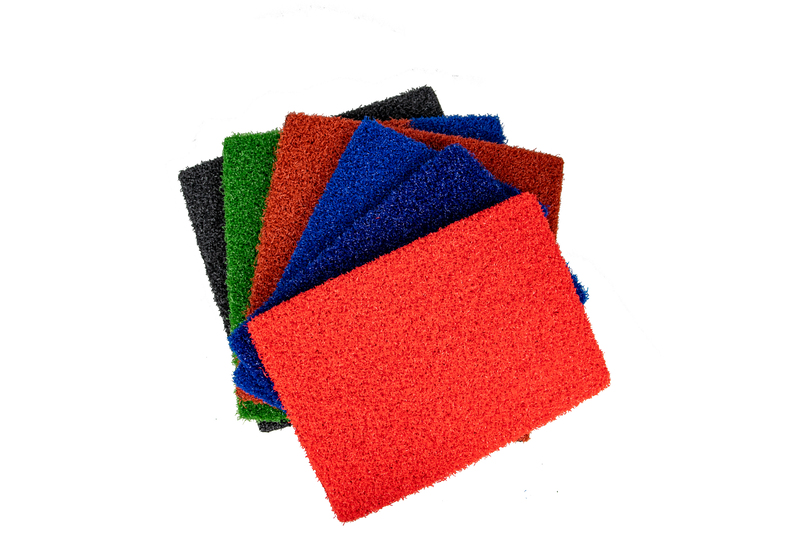
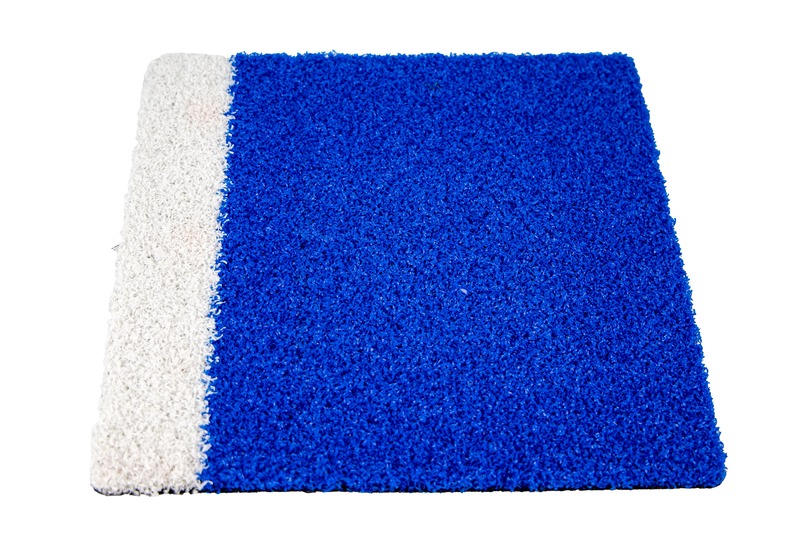
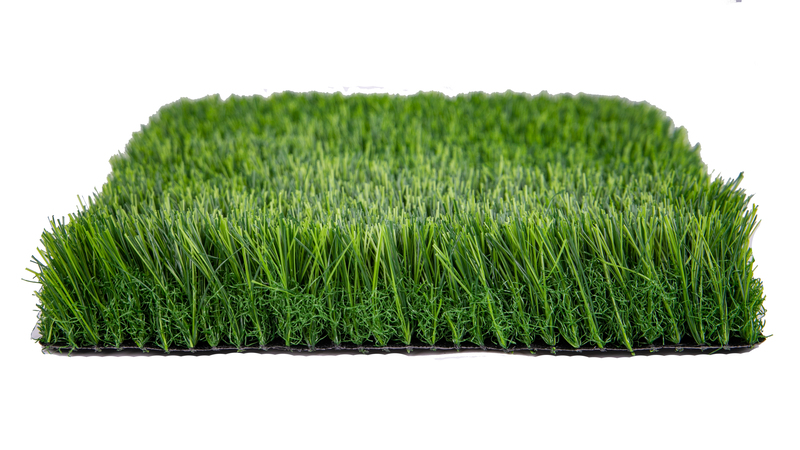
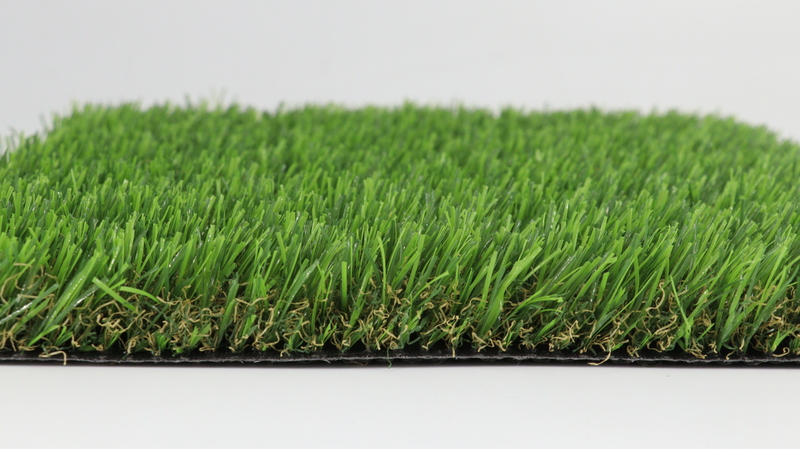
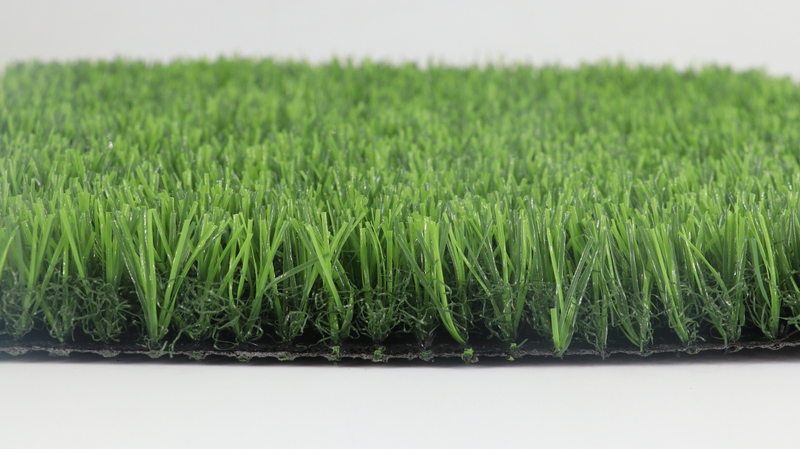
- turf system quality
- lighting systems
- glass standards
- indoor vs outdoor design
- local engineering requirements
Commercial-grade projects designed for high-frequency use typically require higher-quality systems and more precise installation standards.
Land & Location Costs
Location remains one of the largest variables in profitability calculations.
Urban markets may provide stronger occupancy potential but significantly higher land costs. Secondary cities may reduce investment pressure but require stronger community development strategies.
Maintenance & Operations
Long-term operational costs include:
- turf maintenance
- lighting electricity consumption
- glass and structure inspection
- cleaning
- staffing
- booking system management
- climate control for indoor facilities
Because long-term operational performance directly impacts ROI, many commercial projects today increasingly prefer integrated padel court solutions that combine technical coordination, manufacturing support, installation guidance, and system-level project delivery.
This is also why more investors are moving away from simply purchasing standalone materials and instead choosing experienced international partners capable of supporting the full court delivery process — from design coordination to installation execution and long-term project support.
What Determines Whether a Padel Club Becomes Profitable
Location & Demographics
A successful club requires a sustainable player base.
Population density, local sports culture, disposable income, and community lifestyle all directly affect occupancy rates and long-term demand.
Indoor vs Outdoor Strategy
Climate conditions play a major role in profitability.
Outdoor clubs may reduce initial investment costs but can face weather-related booking instability. In colder or rainy markets, indoor facilities often provide stronger year-round operational consistency.
Number of Courts
Single-court projects generally face higher operational risk.
Multi-court facilities are more capable of:
- building active player communities
- hosting events
- supporting academy programs
- improving booking flexibility
- increasing social engagement
- Community density is one of the key drivers behind long-term retention.
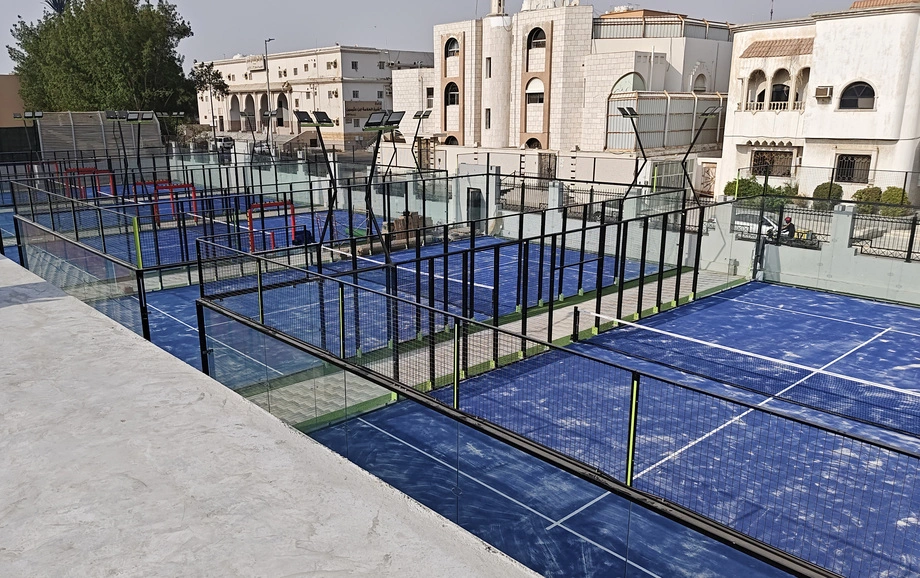
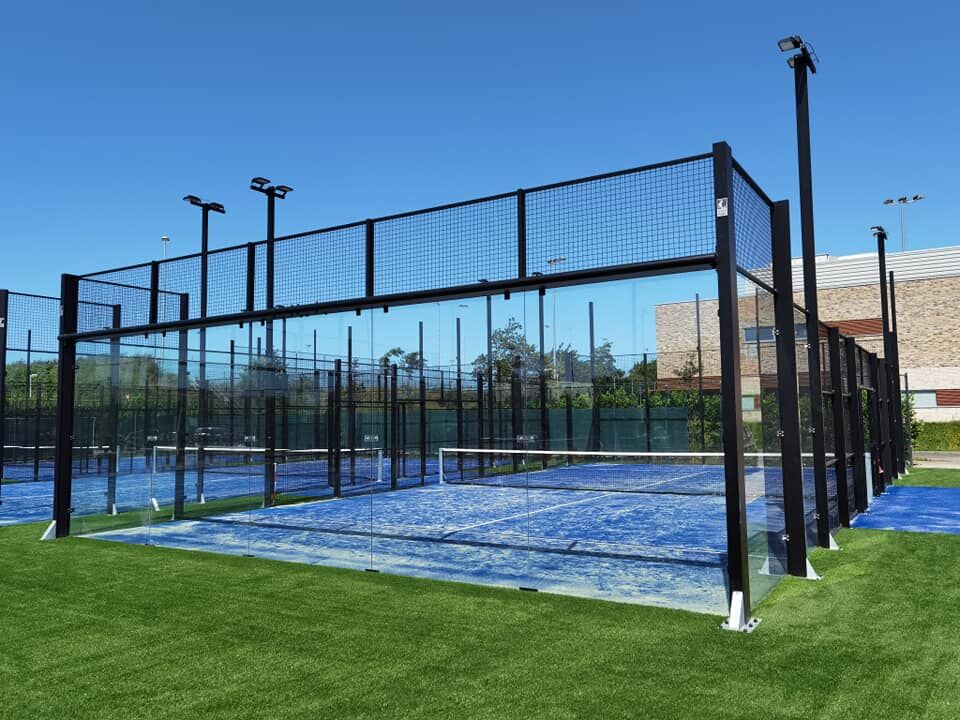
Multi-court padel facilities made by CGT in a commercial sports development in Saudi Arabia, demonstrating scalable club operations
In practice, multi-court padel facilities tend to achieve stronger community engagement and more stable booking performance compared to single-court setups.
In several commercial padel club developments delivered in Europe and the Middle East, multi-court layouts combined with structured booking systems have shown higher utilization consistency and improved player retention over time.
This reinforces the importance of scale and operational flexibility in commercial padel investment models.
Club Experience
Player experience increasingly determines market competitiveness.
Lighting quality, turf comfort, drainage performance, acoustic atmosphere, seating areas, and overall club environment all influence whether players return consistently.
Booking Efficiency & Community Activity
Long-term retention depends not only on operations but also on how effectively the club creates player interaction and recurring engagement.
Active leagues, matchmaking systems, beginner events, and social tournaments significantly improve utilization rates.
In more mature padel markets, investors are increasingly prioritizing long-term durability and player experience rather than simply minimizing initial construction costs. This trend continues to drive demand for complete system-based court solutions engineered specifically for high-frequency commercial usage.
As a result, integrated one-stop padel court delivery—including court systems, turf technology, structural coordination, installation support, and international project experience—is becoming increasingly important for commercial investors aiming to build sustainable facilities rather than short-term projects.
What Type of Padel Court Works Best for Commercial Clubs?
As padel investment becomes more competitive in 2026, investors are paying increasing attention not only to location and operations but also to court configuration and long-term player experience.
Different commercial projects often require different court systems depending on positioning, budget, climate conditions, and target player demographics.
For example:
Super Panoramic padel courts are commonly used in premium clubs, tournament venues, and spectator-focused facilities.
Standard padel courts are often preferred for scalable commercial projects and community sports developments.
Premium padel courts are increasingly chosen for high-frequency clubs prioritizing durability and long-term operational performance.
At the same time, indoor and outdoor strategies continue to influence construction cost, maintenance planning, and year-round booking stability.
As the market matures, many investors are moving toward integrated one-stop padel court solutions that combine system manufacturing, technical coordination, and global installation support to improve long-term project efficiency and player satisfaction.
ROI Expectations: How Long Does It Take to Recover Investment?
Padel ROI varies significantly by market.
Key factors include:
- local market maturity
- land costs
- occupancy rates
- pricing strategy
- operational efficiency
- competition density
- indoor vs outdoor model
Well-operated commercial clubs in strong markets can often recover investment within several years, particularly when court occupancy and secondary revenue streams remain stable.
However, profitability is highly dependent on execution quality.
Poor operational planning, low-quality court systems, weak community management, or inconsistent player experience can dramatically extend payback timelines.
As the industry matures, operational sophistication is becoming just as important as initial market timing.
Is 2026 Still a Good Time to Invest in Padel?
Yes — but the industry is entering a new phase.
The easy “early-growth advantage” seen in some markets is gradually transitioning into a more professional operational environment. Future success will increasingly depend on:
- player experience
- operational management
- court quality
- community building
- long-term facility reliability
In other words, padel investment is no longer only about entering the market early.
It is about building a facility capable of sustaining long-term commercial performance.
For developers, sports investors, resorts, and commercial operators planning new projects in 2026, choosing the right court system and delivery partner is becoming a critical part of investment strategy.
A professionally engineered padel court system does not simply affect construction quality—it directly influences player retention, maintenance efficiency, operational stability, and long-term ROI.
For commercial projects, a complete one-stop padel court solution can significantly reduce coordination risks while improving construction efficiency, installation consistency, and long-term operational performance.
Today, our team supports international padel projects through:
- global project delivery coordination
- integrated padel court system manufacturing
- overseas installation support
- technical consulting & engineering coordination
- customized club planning support
- long-term project assistance
Planning a commercial padel project in 2026?