

Modern Artificial Football Fields Are Multi-Layer Systems
A modern artificial football field is not just synthetic grass—it is a highly engineered, multi-layer system designed to deliver consistent performance, durability, and player safety.
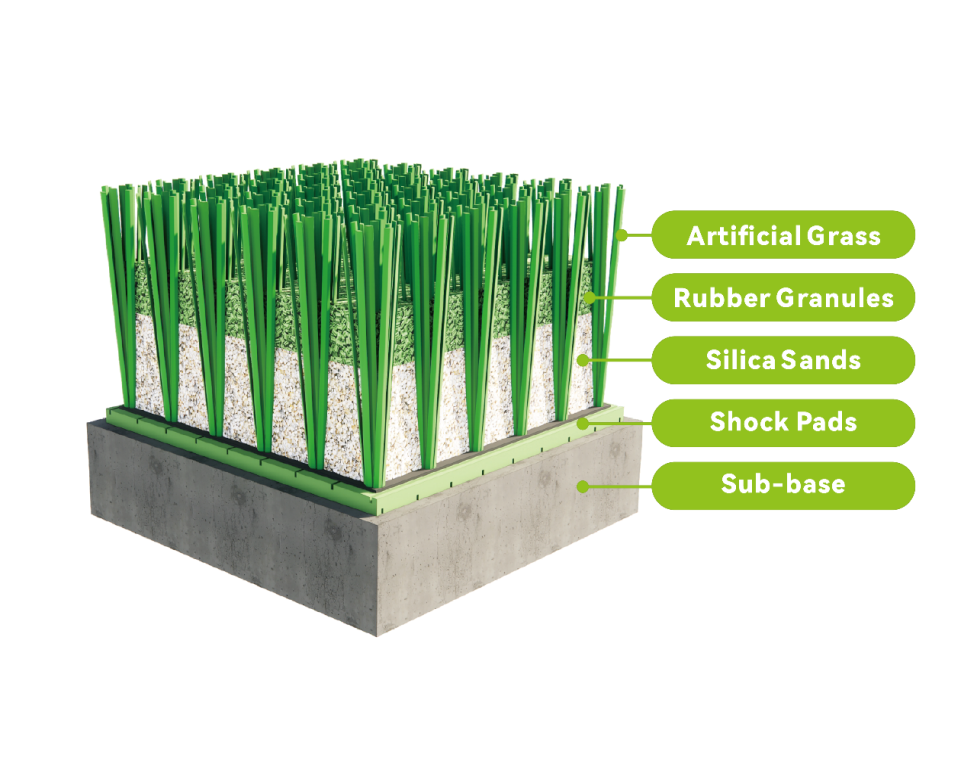
Artificial football turf system structure showing layers including sub-base, drainage, shock pad, turf carpet and infill
A typical system includes:
Subgrade (compacted soil foundation)
Base layers (crushed stone / asphalt / concrete)
Drainage system
Shock pad (optional but increasingly common)
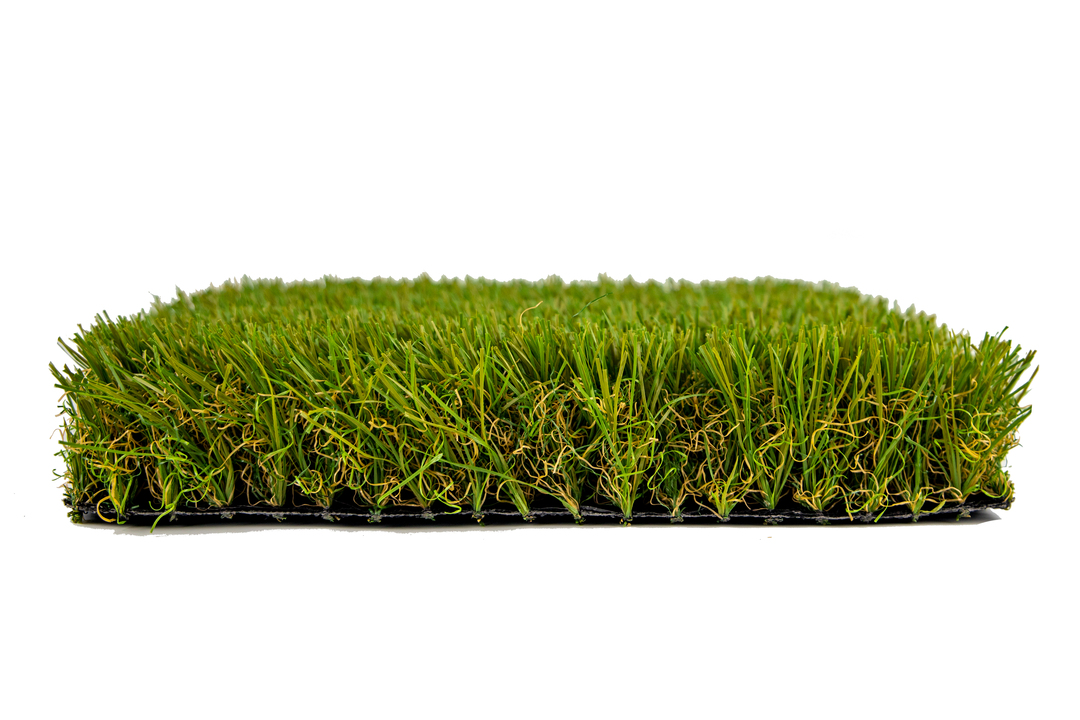
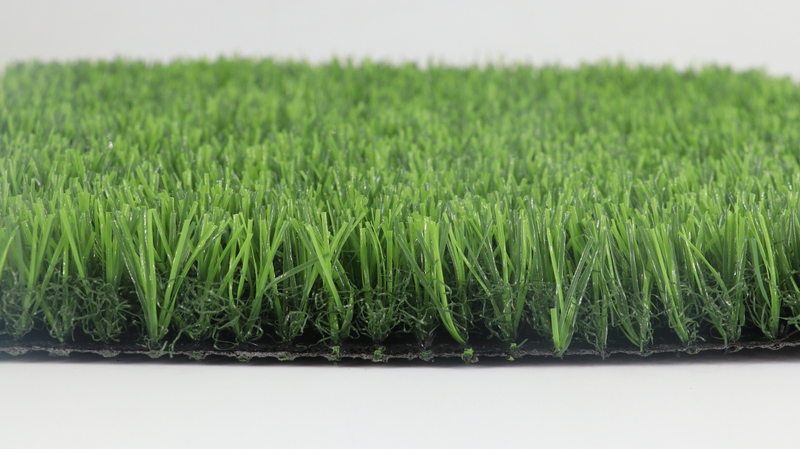
Artificial turf carpet
Infill (sand + performance granules)
Each layer plays a specific role. Among them, the shock pad layer has become a key differentiator in high-performance football turf systems.
What Is a Shock Pad?
A shock pad is a specialized elastic layer installed between the structural base and the artificial turf carpet in a modern football field system. It serves as a critical performance layer that directly influences player safety, surface comfort, and long-term field consistency.
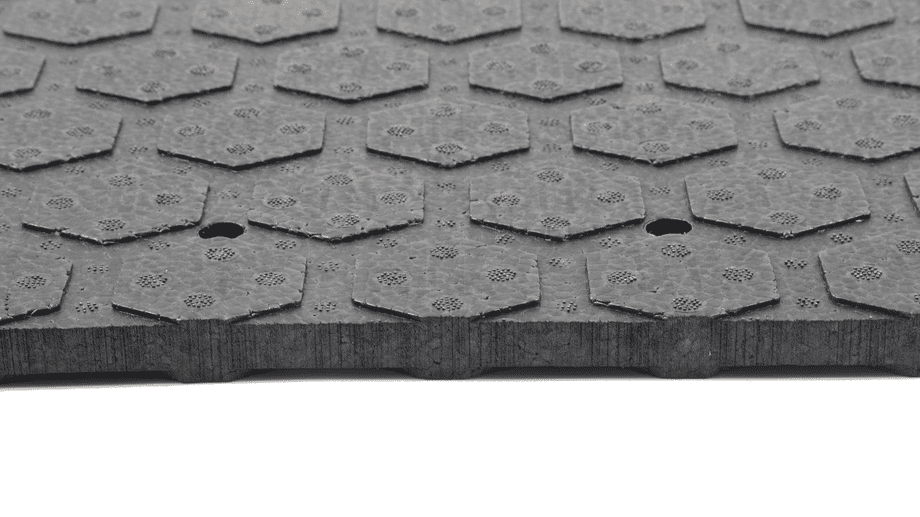
Prefabricated shock pad panels used in artificial football turf systems for impact absorption
Depending on the project requirements and construction method, shock pads can be manufactured in different forms:
Prefabricated foam panels – Typically made from materials such as XPE or EPP, these panels are factory-produced with controlled density and thickness, ensuring uniform performance across the entire field.
In-situ rubber systems – Installed directly on-site by mixing rubber granules with a specialized binder (such as polyurethane resin), then paving and curing the material to form a seamless elastic layer.
Recycled rubber or eco-friendly composite materials—Increasingly used in sustainable sports construction, these shock pads incorporate recycled tire rubber or bio-based materials, helping reduce environmental impact while maintaining performance standards.
Functionally, the shock pad acts as a mechanical buffer and energy management layer within the turf system. When players run, jump, or fall, the surface is subjected to dynamic loads. The shock pad works to:
Absorb impact forces, reducing stress on joints and lowering injury risk
Provide controlled energy restitution, ensuring the surface feels responsive rather than overly soft
Stabilize performance over time, maintaining consistent shock absorption even as infill materials compact or shift
Improve surface uniformity, eliminating hard spots and enhancing overall playability
In essence, while often hidden beneath the turf, the shock pad plays a decisive role in transforming an artificial field from a basic surface into a high-performance sports system.
Technical Principles Behind Shock Pads
From an engineering perspective, a shock pad fundamentally alters how forces are transmitted, absorbed, and redistributed within the artificial turf system. Rather than allowing impact loads to pass directly to the rigid base, it introduces a controlled elastic layer that optimizes both safety and performance.
1. Impact Attenuation
When a player runs, jumps, or falls, the surface is subjected to dynamic impact forces. The shock pad absorbs a portion of this kinetic energy, effectively reducing the peak force transmitted to the body. This helps lower stress on joints, ligaments, and muscles and is particularly important for minimizing acute and repetitive impact injuries.
2. Energy Return (Elasticity)
A high-quality shock pad is engineered to provide not only energy absorption but also controlled energy return. By releasing part of the stored energy back to the athlete, it supports more natural movement patterns, improves responsiveness underfoot, and helps reduce player fatigue during extended play.
3. Load Distribution
The shock pad acts as a load-spreading layer, dispersing localized point loads over a broader surface area. This reduces stress concentration on both the base structure and the turf fibers, contributing to improved structural integrity and more uniform surface behavior.
4. Long-Term Performance Stability
Unlike infill-dependent systems, where performance can fluctuate due to infill migration or compaction, a shock pad provides a stable and independent source of shock absorption. This ensures that key performance parameters remain consistent over time, even under heavy usage conditions.
These combined mechanisms enable the turf system to meet stringent performance criteria, making shock pads a critical component in achieving reliable, long-term compliance with professional football turf standards.
Advantages of Using a Shock Pad
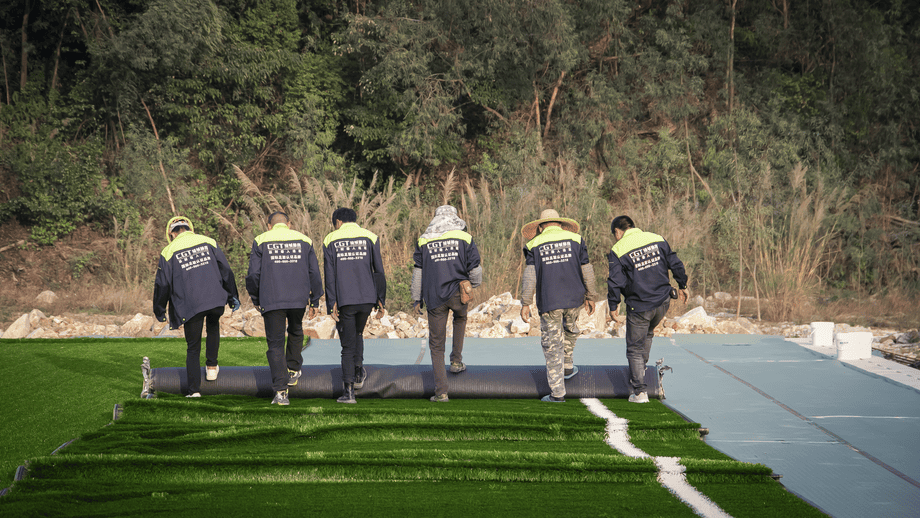
Artificial turf installation over pre-installed shock pad layer on football field
1. Improved Player Safety
One of the most important benefits of a shock pad is its ability to significantly enhance player safety. By effectively absorbing impact forces, it reduces the risk of injuries caused by running, jumping, or falling. In particular, it improves head injury criteria (HIC) performance, which is a key metric in evaluating sports surface safety. Additionally, the added cushioning layer makes the surface more comfortable, especially during tackles and accidental falls.
2. Consistent Playing Performance
A shock pad helps maintain consistent playing characteristics over time. Unlike systems that rely heavily on infill, it provides stable shock absorption regardless of infill migration or compaction. This reduces dependency on precise infill depth and ensures that the surface performs uniformly across the entire field, delivering a reliable and predictable playing experience.
3. Extended Turf Lifespan
By acting as a buffer layer, the shock pad reduces mechanical stress on both the turf fibers and the underlying base. This minimizes wear and tear, prevents excessive base deformation, and ultimately extends the overall lifespan of the turf system. As a result, the field maintains its performance characteristics for a longer period, improving long-term return on investment.
4. Better Compliance with Standards
Shock pads play a crucial role in helping artificial football fields meet higher-level certification requirements. They enable more precise control over key performance indicators such as shock absorption and vertical deformation, ensuring that testing results remain consistent throughout the field’s lifecycle. This makes compliance with professional standards more achievable and sustainable.
5. Reduced Maintenance Sensitivity
Another key advantage is reduced maintenance dependency. With a shock pad in place, the system becomes less sensitive to infill loss or uneven distribution, meaning less frequent top-ups are required. It also performs more reliably under heavy usage conditions, making it particularly suitable for high-traffic fields where consistent maintenance may be challenging.
When Do You Really Need a Shock Pad?
Not every artificial football field project strictly requires a shock pad. However, depending on performance requirements, usage intensity, and budget considerations, it is often a highly recommended—or even essential—component.
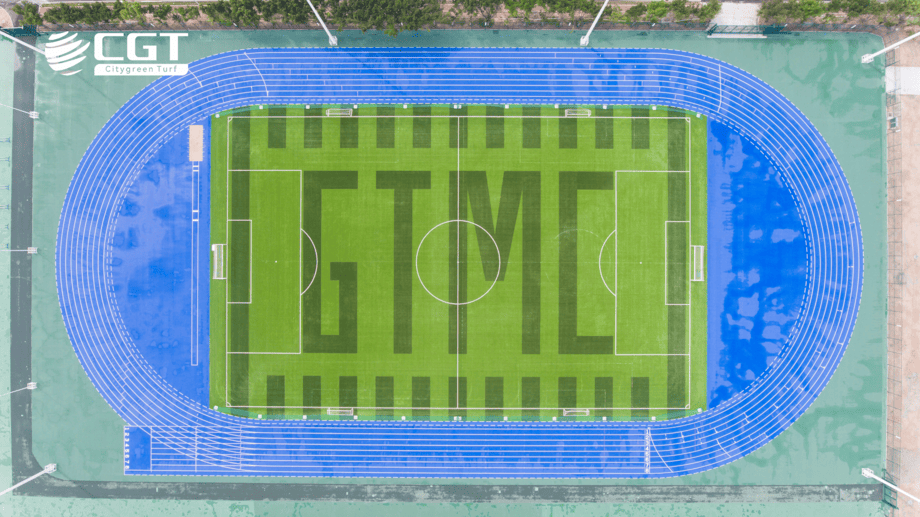
Artificial football field project where shock pad may be recommended based on usage needs
Ideal Use Cases
Professional & Competition Fields
Shock pads are critical in professional or competition-level fields where high-performance standards must be consistently achieved. They help ensure uniform playing conditions while supporting compliance with safety and certification requirements.
High-Usage Facilities
For schools, academies, and training centers with intensive daily use, shock pads significantly improve durability and performance stability. They help the field maintain consistent characteristics despite heavy wear over time.
Multi-Sport Fields
In multi-purpose fields used for football, rugby, and other sports, a shock pad enhances versatility by providing better shock absorption across different movement patterns and impact types.
Regions with Hard Sub-Bases
When the field is constructed on rigid foundations such as concrete or asphalt, a shock pad becomes especially important. It compensates for the lack of natural elasticity, creating a safer and more comfortable playing surface.
Long-Term Investment Projects
For projects focused on lifecycle value, shock pads help reduce maintenance frequency, extend system lifespan, and improve overall return on investment.
Our Recommended System Solutions
To address different project needs, we offer integrated artificial football turf systems with flexible configurations:
Standard System (Without Shock Pad)
This system is ideal for budget-sensitive projects or fields with low usage frequency. Performance is primarily achieved through optimized infill design, making it suitable for basic applications.
Advanced System (With Shock Pad)
Designed for a balance between cost and performance, this system incorporates either prefabricated or in-situ shock pad solutions. It provides improved safety, comfort, and long-term consistency.
Professional FIFA-Grade System
This high-performance system includes a premium shock pad layer engineered for elite-level play. It delivers maximum durability, stability, and compliance with top-tier standards.
Eco-Friendly System
For sustainable projects, this system uses recycled or environmentally friendly shock pad materials. It reduces environmental impact while maintaining strong performance characteristics.
One-Stop Service (3P Model)
We provide a complete project solution covering every stage:
Pre-sales: Design consultation and system selection
In-process: Manufacturing and quality control
Post-sales: Installation guidance and maintenance support
Conclusion: Do You Need a Shock Pad?
A shock pad is not just an optional layer—it is a performance and safety upgrade that enhances the entire football turf system.
For basic, low-use fields, it may be optional
For professional or high-frequency use, it is increasingly essential
As artificial football fields evolve toward system-based engineering, shock pads are becoming a key component in delivering consistent performance, improved player safety, and long-term value.