

International sports facility projects are often far more complex than expected. Many people assume the biggest challenge is simply delivering materials or completing construction on schedule. In reality, large-scale sports projects involve continuous coordination across planning, engineering, logistics, installation, technical communication, and long-term operational considerations.
Especially in overseas projects, delays and failures are rarely caused by a single issue. More often, problems emerge when different stages of the project are disconnected from each other. Poor drainage planning, communication gaps between suppliers and contractors, installation scheduling conflicts, or local construction limitations can all directly affect the final facility quality.
Whether it is a football stadium, padel club, athletics facility, or multi-purpose sports complex, successful project delivery depends on systematic coordination from planning to installation.
Every Sports Facility Project Starts with Different Requirements
Every sports facility project has completely different priorities depending on its usage scenario, operational goals, and local environment.
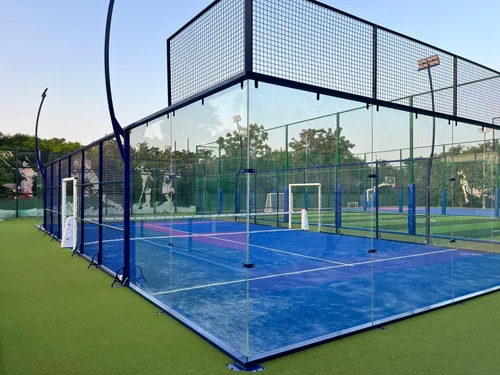
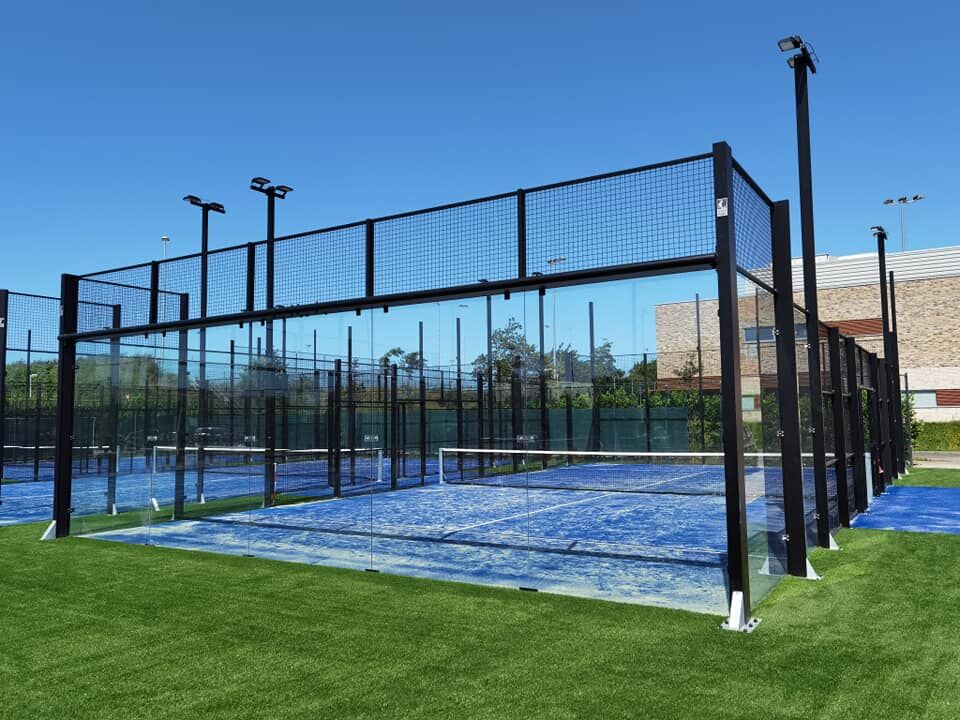
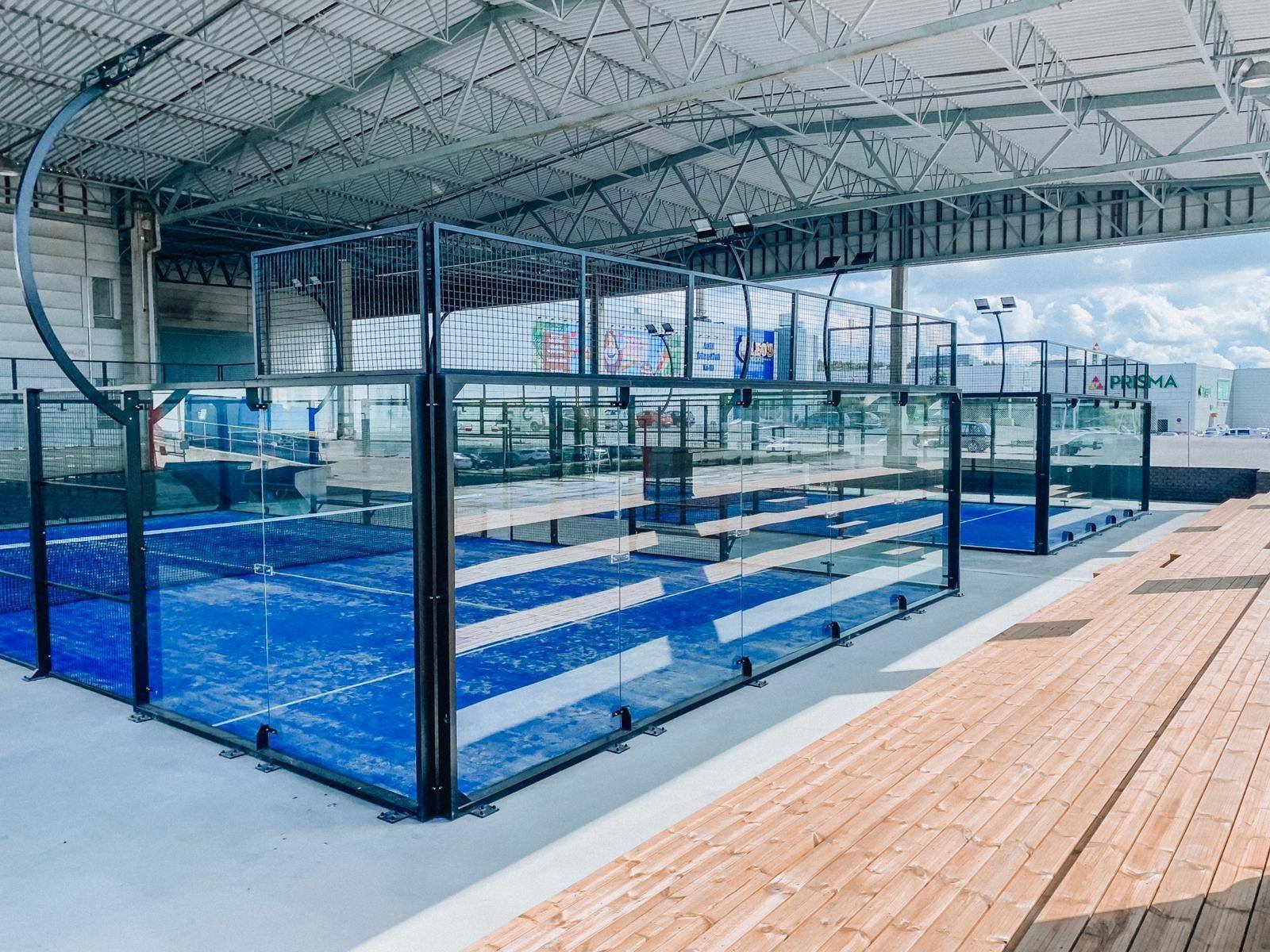
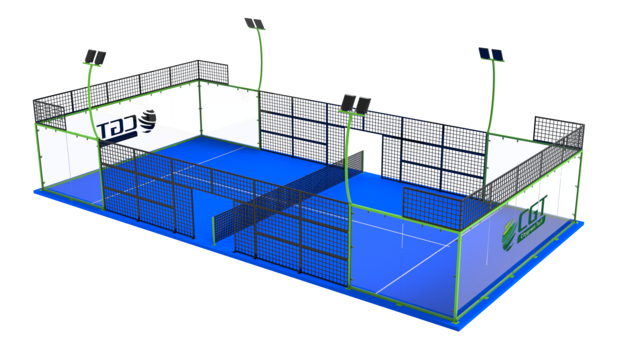
For example, a professional football stadium may focus heavily on international standards, athlete performance, drainage efficiency, and long-term durability. A commercial padel club may care more about installation speed, maintenance efficiency, aesthetics, and daily commercial operation. Meanwhile, school or community projects often prioritize safety, cost control, and simplified maintenance.
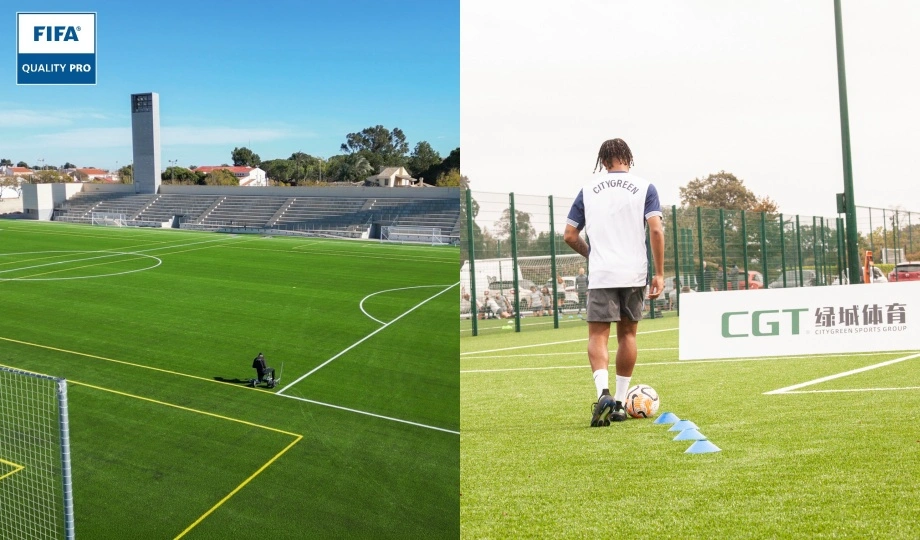
Elevating international standard delivery—CGT's FIFA-certified pitch installation in Spain (left) and professional system integration aligned with Premier League-level requirements (right)
In the realm of professional competitive sports, this pursuit of standards is exceptionally rigorous. Take, for example, our development of two FIFA-standard pitches in Spain, alongside our deep project collaboration related to Tottenham Hotspur. From the physical properties of the turf fibers and ball rebound rates to shock absorption and comprehensive field testing, every phase was strictly controlled to meet the highest FIFA benchmarks and Premier League-level youth training and testing requirements. This establishes a fundamental difference in purpose and standard compared to ordinary commercial or community projects.
Because of these differences, international projects cannot follow a single fixed solution. Surface systems, structural planning, installation methods, and technical standards all need to be adjusted according to the actual project requirements.
This is also why experienced project coordination becomes important from the very beginning. The clearer the technical direction is during planning, the smoother the later construction process usually becomes.
Site Evaluation and Technical Planning Before Construction
Before construction begins, professional site evaluation and technical planning play a critical role in the overall success of the project.
Many long-term field problems are not caused by the turf itself but by insufficient planning during the early stages. Poor drainage performance, uneven surfaces, premature wear, or maintenance difficulties often originate from an incomplete site assessment.
For international projects, especially, technical planning must consider factors such as local climate conditions, rainfall levels, soil structure, sub-base conditions, drainage requirements, and local construction regulations. Different countries and regions may require completely different technical solutions.
A drainage system suitable for one environment may not perform properly under tropical rainfall conditions. Similarly, installation methods that work well in one market may need adjustment due to different local construction conditions or equipment limitations.
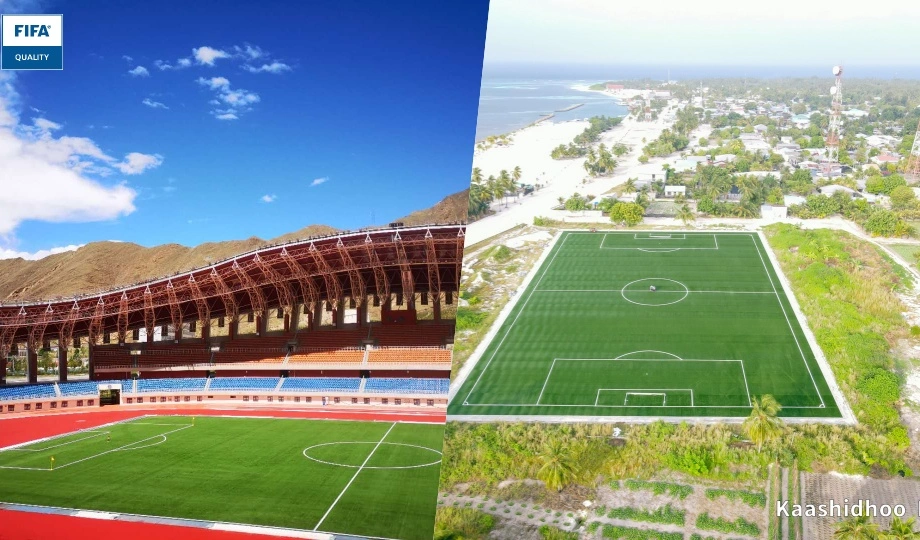
Engineering for extremes—tailored sub-base and material adaptation for the FIFA pitch in the high-altitude, high-UV plateau environment of Lhasa, Tibet (left), and the tropical, corrosive marine climate of the Maldives (right).
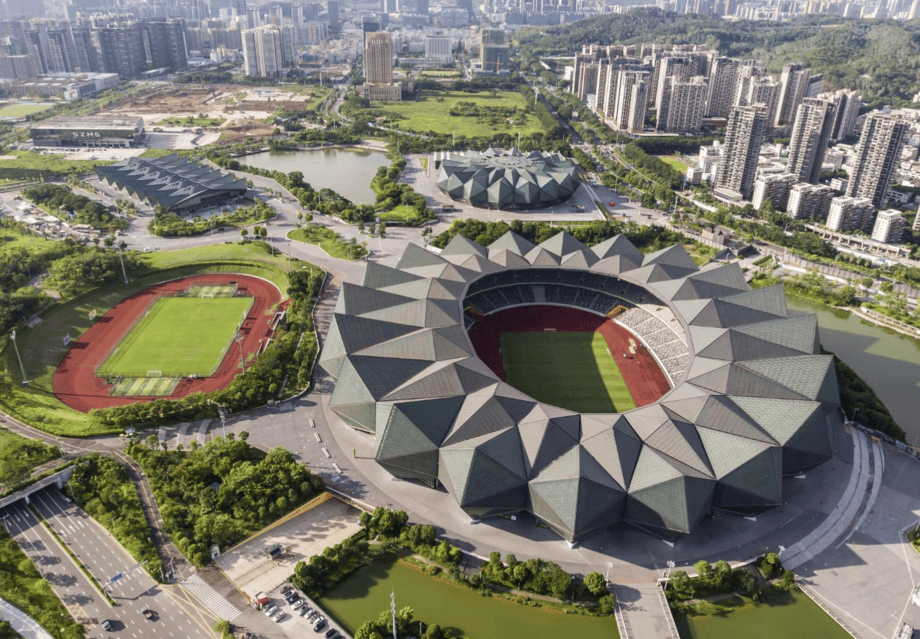
This capability for tailored technical planning has been fully validated across our extreme project case studies. In the construction of the FIFA pitch in the Maldives, our team focused heavily on overcoming the challenges of a highly volatile, humid, and corrosive marine climate, safeguarding the system's lifespan by upgrading material weather resistance. Meanwhile, in delivering the Lhasa Mass Culture and Sports Center project in Tibet, we successfully navigated an extreme plateau environment characterized by high altitude, low atmospheric pressure, intense UV radiation, and freezing, unpredictable weather, completely adapting our installation techniques and sub-base compatibility.
Early-stage planning directly affects the long-term stability and lifespan of the facility. In many cases, solving technical issues before construction is far easier and more cost-effective than correcting problems after installation has already started.
Material Coordination Is Only One Part of the Project
Many clients initially view sports facility development as a material supply project. However, materials are only one part of a much larger coordination process.
Even when high-quality turf systems and equipment are used, projects can still encounter delays or technical problems if communication between different stages is not properly managed.
International sports projects usually involve multiple interconnected processes, including:
- Installation scheduling
- Equipment preparation
- Shipping and logistics coordination
- Labor organization
- Technical supervision
- Construction sequencing
- Cross-team communication
In practice, project delays are often caused by coordination issues rather than product quality itself. Shipping delays may affect installation timing during bad weather conditions. Miscommunication between local contractors and overseas suppliers may create inconsistencies during installation. Unexpected site conditions may also require technical adjustments during construction.
Because of this, successful project delivery depends heavily on how effectively different teams and project stages are coordinated.
Overseas Installation Requires More Than Construction Experience
Overseas sports facility installation is rarely difficult because of the construction itself. The real complexity comes from everything surrounding execution.
Language barriers often slow down technical communication between on-site teams and overseas engineers. Local working conditions can be completely different from what the project team is used to, including labor practices, site management habits, and available equipment. Weather conditions may also change installation sequences, especially for turf systems that are sensitive to humidity, temperature, or curing time.
On top of that, international projects are usually under tight delivery schedules, where delays in shipping or site readiness can immediately compress installation windows. In many cases, teams also need to rely on remote communication to solve technical issues in real time, which increases coordination difficulty even further.
These challenges are not isolated problems. They interact with each other throughout the entire project lifecycle.
Because of this, overseas project success is not defined by how close a contractor is to the site or how experienced they are in general construction. It depends on whether the team has system-level international project experience—the ability to coordinate engineering, logistics, installation, and communication under cross-border conditions.
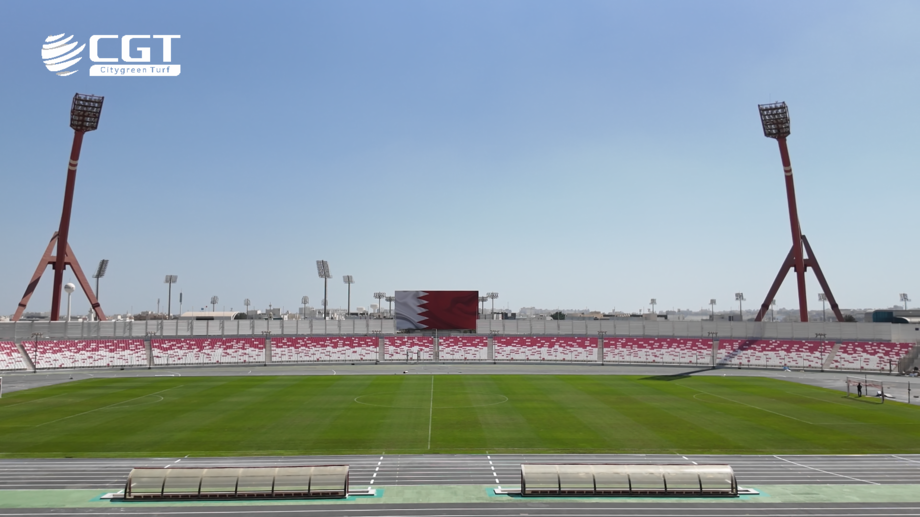
Systemic overseas delivery—Overcoming the extreme heat, arid climate, and unique sandy soil structure through CGT's centralized engineering coordination and installation management for the sports facility project in Bahrain.
We have supported multiple international sports facility projects under these highly complex, cross-border conditions. A prime example is our project in Bahrain; faced with the extreme heat and arid climate of the Middle East, a unique sandy soil structure, and the rigorous demands of an international supply chain, our team did not merely provide premium system materials. Instead, through systemic overseas installation management and round-the-clock remote technical dispatch, we seamlessly guided the local teams to overcome cross-cultural field habits and distinct geological challenges.
This is also why we position ourselves as a long-term international project partner, not just a material supplier or installation team.
Remote Technical Support During International Projects
Modern international sports projects increasingly rely on remote technical coordination throughout construction and installation.
Even when overseas teams cannot remain permanently on-site, projects still require continuous communication and technical supervision to maintain construction quality and schedule control.
Remote support during international projects may include:
- Online technical meetings
- Installation guidance
- Construction monitoring
- Real-time troubleshooting
- Technical documentation support
- Progress coordination between teams
Strong remote support capability has become an important part of international project delivery because it allows technical problems to be solved more efficiently, even under complex overseas conditions.
Responsive communication and ongoing technical coordination help improve installation consistency while reducing delays during construction.
Why Integrated Project Coordination Matters
Successful sports infrastructure projects are rarely determined by a single factor.
Not by the turf alone.
Not by the installer alone.
And not by isolated construction experience.
What ultimately defines project success is how well every stage of the system works together.
From drainage engineering and base preparation to logistics planning, installation sequencing, certification compliance, and final performance testing — each component directly affects the long-term durability and playability of the facility.
In international projects, this coordination becomes even more critical.
Different climates, local construction standards, language barriers, shipping schedules, and on-site execution conditions can quickly create delays or inconsistencies if the project lacks centralized technical management. Even high-quality materials can underperform when system coordination breaks down.
This is why experienced developers and contractors increasingly prioritize integrated project delivery instead of fragmented supply relationships.
A coordinated delivery approach helps ensure:
- Consistent technical standards across all project stages
- Faster problem-solving during overseas execution
- Better communication between suppliers, installers, and local teams
- Reduced installation risks and scheduling conflicts
- Greater consistency in final field performance and certification outcomes
At CGT, international projects are supported through a complete coordination framework — combining certified sports systems, technical consulting, overseas installation management, construction guidance, and long-term after-sales support.
Rather than acting only as a material supplier, the team works as a long-term project partner throughout the full delivery cycle.
This integrated approach has supported sports facility projects across multiple international markets, helping clients reduce execution uncertainty while maintaining professional performance standards from planning to completion.
From the strict FIFA-standard benchmarks in Spain and our collaborations with Tottenham Hotspur, to the logistical and environmental extremes of Bahrain, the Maldives, and high-altitude Lhasa, this integrated framework remains our core formula for delivering predictable, world-class results worldwide.
Whether planning a football pitch, padel facility, training center, or multi-sport complex, integrated coordination can significantly improve project efficiency, construction quality, and long-term operational performance.