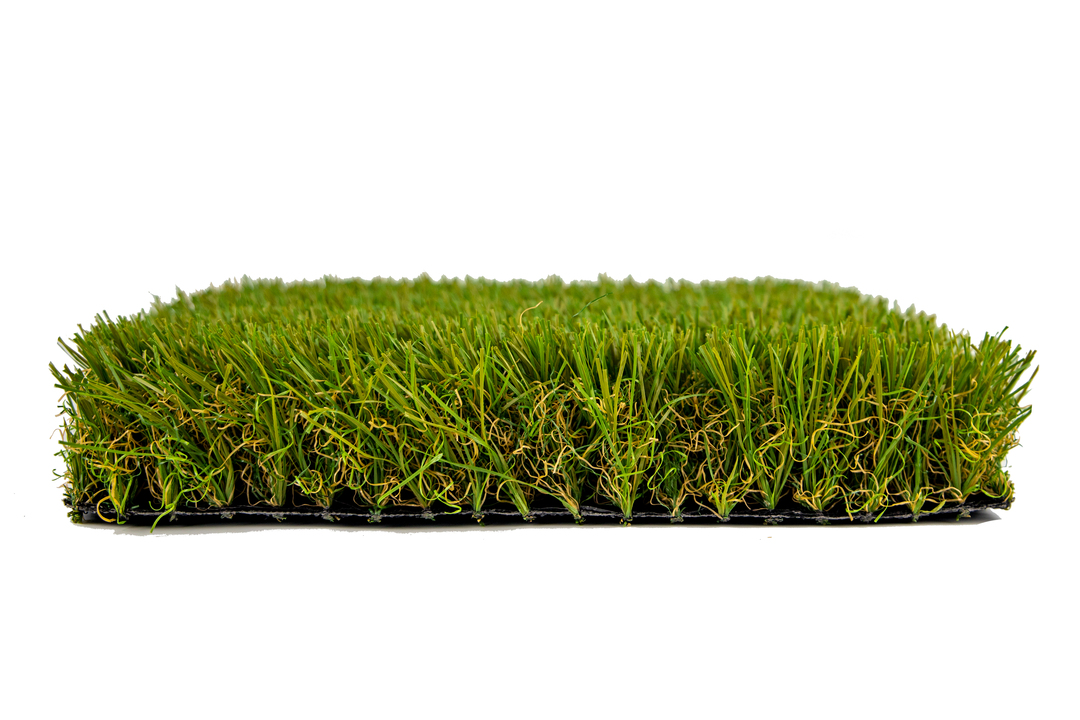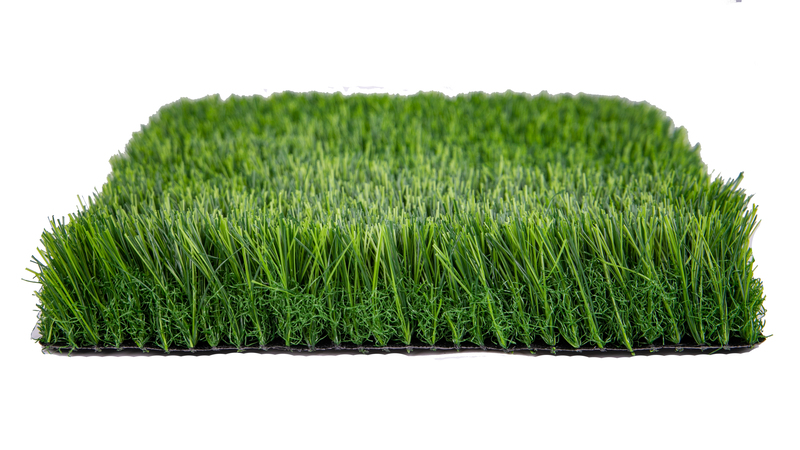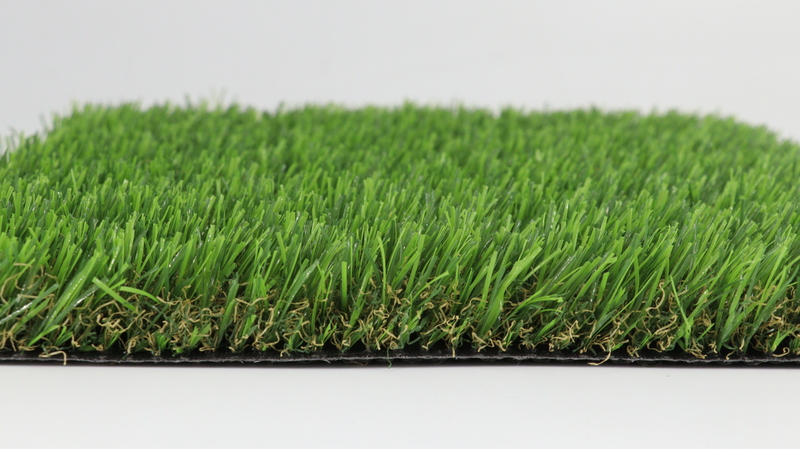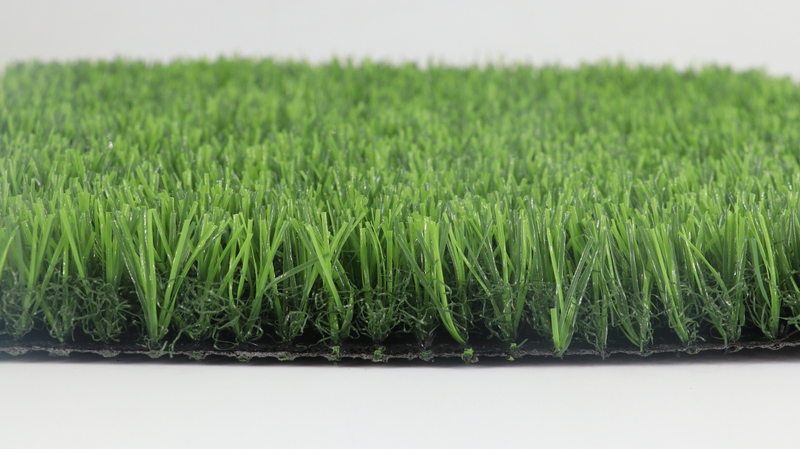
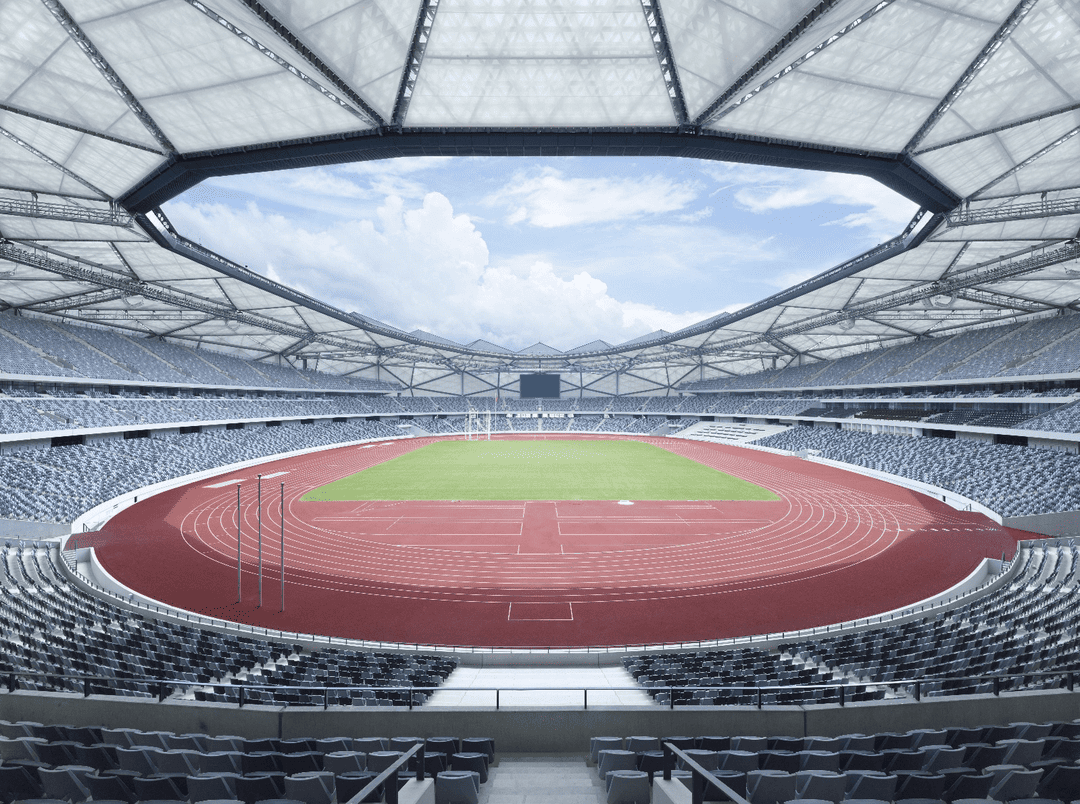
Artificial football fields have become increasingly common in stadiums, schools, training centers, and community sports facilities around the world. Compared with natural grass, artificial turf systems offer superior durability, lower maintenance requirements, and consistent playing performance throughout the year.
But building a professional artificial football pitch involves far more than simply rolling out synthetic grass. A modern football turf field is a carefully engineered system consisting of multiple layers designed to provide proper drainage, surface stability, player safety, and long-term durability.
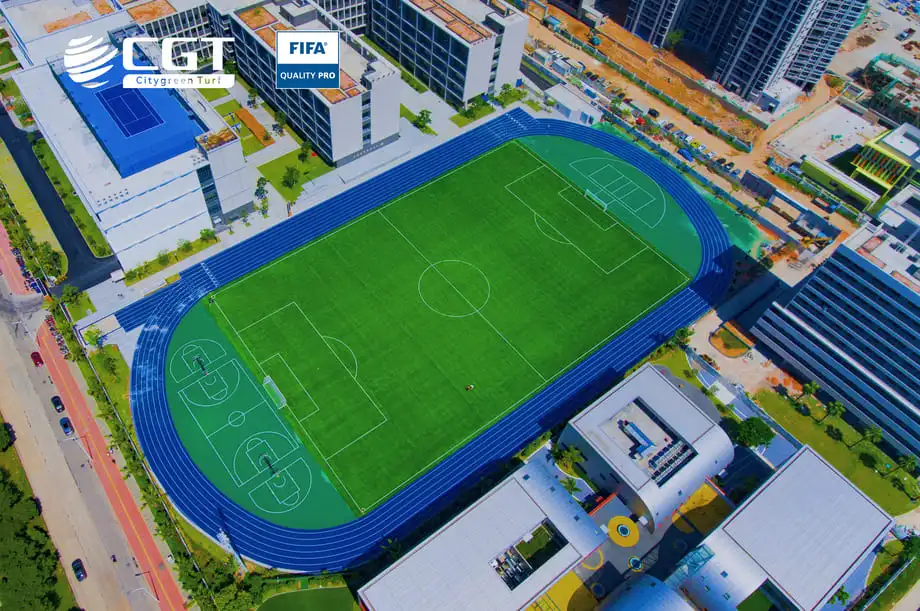
professional artificial football field with FIFA quality turf system
In this guide, we walk through the key stages of artificial football field construction—from early site preparation to the final turf installation.
Why Artificial Football Fields Are Becoming More Popular
Over the past two decades, artificial turf technology has improved significantly. Modern systems now replicate many of the performance characteristics of natural grass while offering practical advantages for facility owners.
Some of the main reasons artificial football fields are widely adopted include:
Year-round usability
Natural grass fields can become muddy, worn, or unusable during heavy rainfall or intensive use. Artificial turf allows continuous play regardless of weather conditions.
Lower maintenance costs
Maintaining a natural grass football field requires irrigation, fertilization, mowing, and pest control. Artificial turf significantly reduces these ongoing maintenance efforts.
Higher durability for multi-use facilities
Artificial football fields can withstand heavy usage from training sessions, matches, school activities, and community events without rapid surface deterioration.
Consistent playing performance
Modern artificial turf systems are engineered to provide predictable ball roll, traction, and shock absorption for athletes.
Because of these advantages, artificial football pitches are now commonly installed in stadiums, training centers, schools, and municipal sports complexes worldwide.
Site Preparation: The Foundation of a High-Quality Field
Before any turf installation begins, proper site preparation is essential. This stage determines the long-term stability, drainage performance, and lifespan of the entire football field.
Site Selection and Planning
The first step is evaluating the project location. Engineers analyze factors such as:
- Soil conditions
- Groundwater levels
- Local climate
- Available drainage outlets
- Field orientation
Proper site planning ensures that the football field meets both functional requirements and regulatory standards.
Earthwork and Excavation
Once the layout is confirmed, construction begins with earthwork and excavation. The surface soil is removed, and the field area is leveled according to the design elevation.
This process typically includes:
- Removing unstable soil layers
- Compacting the subgrade
- Establishing a stable base for the field structure
Proper compaction is crucial to prevent future surface settlement or unevenness.
Drainage and Slope Design
Effective drainage is one of the most important aspects of artificial football field construction.
Most football fields are built with a slight crown or cross-slope, typically around 0.5–1%, allowing rainwater to drain efficiently toward the edges or underground drainage systems.
A typical drainage system may include:
- Perforated drainage pipes
- Gravel drainage layers
- Water collection channels
This design ensures that rainwater quickly moves through the turf and base layers, preventing water accumulation on the surface.
Base Construction and Structural Layers
After the ground preparation is complete, the next step is building the structural base of the football turf system.
This base layer is responsible for providing stability, load distribution, and proper drainage.

football field base preparation and drainage construction for artificial turf field
A typical artificial football field base structure includes:
- Crushed stone foundation layer
A compacted crushed stone layer forms the primary structural base. It provides strength and distributes loads evenly across the field. - Fine grading layer
A finer aggregate layer is installed above the base to achieve precise leveling and smoothness. - Optional shock pad layer
Some professional football fields include a shock-absorbing pad installed between the base and the artificial turf. This layer improves impact absorption and player comfort.
These structural layers create a stable platform for the artificial turf installation.
Artificial Turf Installation Process
Once the base construction is completed, the artificial turf installation phase begins. This stage requires careful alignment, precise seam joining, and controlled infill application to ensure the football field delivers consistent performance and long-term durability.

workers installing artificial football turf by rolling out turf on a professional football field
Turf Roll Positioning and Layout
Artificial turf is delivered in large rolls and carefully positioned across the field. Installation typically begins from the center of the pitch and progresses outward to maintain symmetrical alignment.
Each turf roll must be placed with attention to:
- Fiber direction consistency for uniform appearance
- Accurate alignment between adjacent rolls
- Proper spacing for seam preparation
Most turf products include directional arrows on the backing to guide installers and ensure that all grass fibers lean in the same direction, which helps maintain a consistent visual effect and ball movement across the pitch.
Optional Shock Pad Installation
For professional or high-usage football fields, a shock pad layer is often installed between the base and the artificial turf.
Shock pads typically measure 10–12 mm in thickness and are laid in parallel rows across the field. This layer enhances:
- Player impact absorption
- Surface elasticity
- Long-term turf system performance
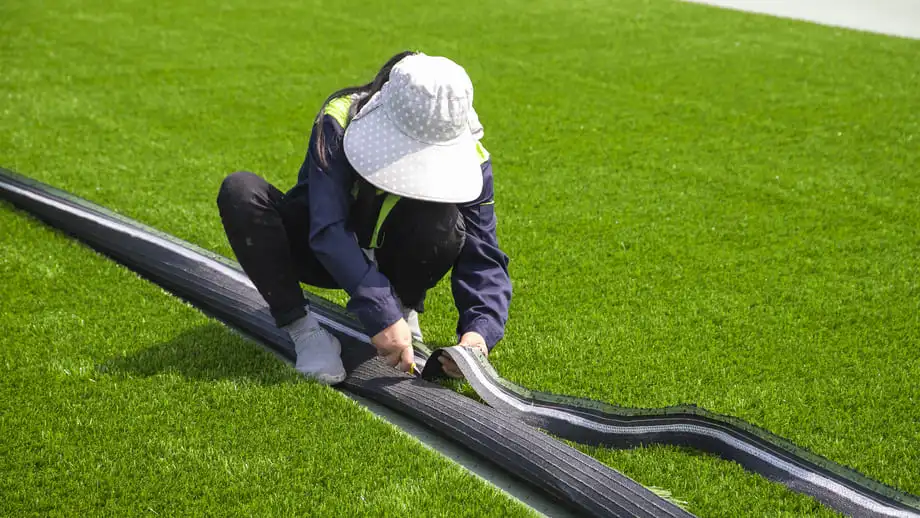
Professional installers cutting and trimming artificial football turf rolls for precise seam joining
Seam Joining and Adhesive Bonding
After positioning the turf rolls, installers connect them using joint tapes and specialized adhesives.
The standard process includes:
- Placing PET seam tapes (20–30 cm wide) beneath the joint lines
- Applying two-component polyurethane adhesive evenly along the tape
- Pressing the turf edges firmly onto the adhesive
- Rolling or hammering the seam to ensure secure bonding
This process creates durable, nearly invisible seams that prevent turf separation during long-term use.
Importantly, professional installations avoid gluing the turf directly to the base, allowing the system to maintain proper flexibility and drainage.
Cutting and Installing Field Markings
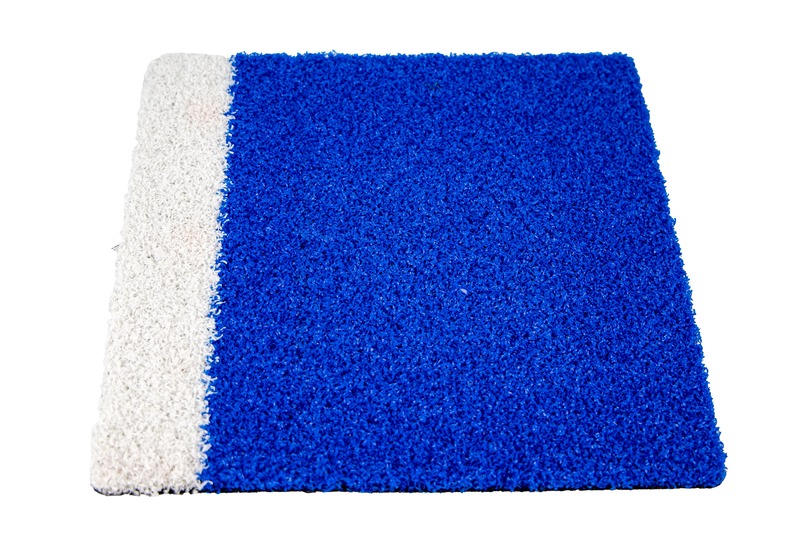
Football field markings are not painted onto artificial turf. Instead, they are integrated directly into the turf surface during installation.
- The process typically involves:
- Cutting narrow strips from the green turf surface
- Inserting pre-manufactured white turf lines
- Securing them with joint tape and adhesive
This technique ensures that field markings remain durable and clearly visible throughout the life of the pitch.
Infill Installation: Sand and Performance Granules
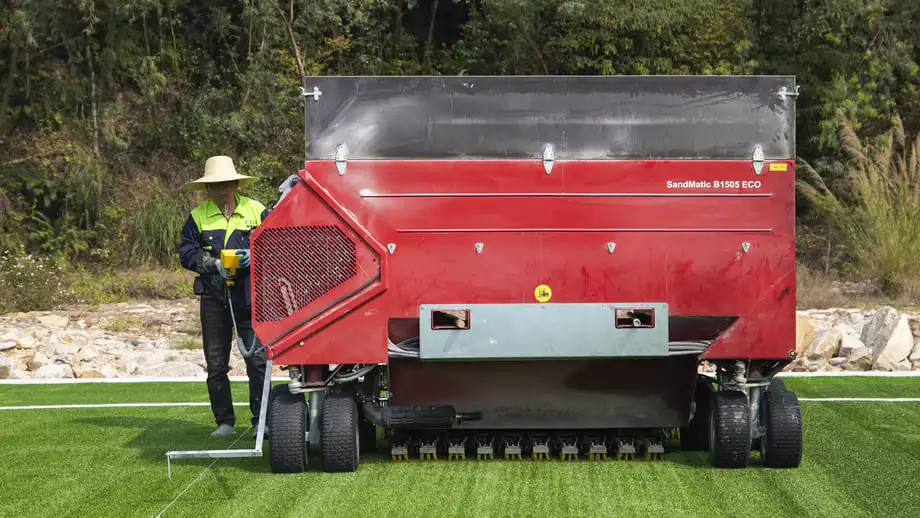
Worker applying adhesive infill on artificial football turf using a specialized injection machine
Once the turf surface is secured, installers distribute infill materials across the field.
A typical 3G football turf system uses two layers of infill:
- Silica sand
Provides stability and helps keep turf fibers upright.
Performance infill granules
Usually made of rubber materials such as SBR, EPDM, or TPE, these granules improve:
- Shock absorption
- Player traction
- Ball response
Automatic infill spreaders are often used to ensure uniform distribution across the entire field.
After installation, the turf is brushed repeatedly to allow the infill to settle properly between the fibers.
For most football turf systems, the final infill depth is typically around 13–15 mm, depending on the specific turf design.
If you want a deeper explanation of turf structures, you can also read:→ FIFA Football Turf Systems Explained: How Professional Football Fields Are Built
Final Field Finishing and Quality Inspection
Once the turf installation is complete, the field enters the final finishing stage.
This step ensures the football field meets both performance standards and visual quality requirements.
Typical finishing work includes:
- Final brushing and grooming of turf fibers
- Verification of infill levels
- Inspection of seams and joints
- Installation of field markings and goal anchors
Professional contractors may also perform performance testing such as:
- Surface evenness
- Ball roll and rebound tests
- Shock absorption measurements
These checks ensure the artificial football field is ready for safe and consistent play.
However, these basic checks represent only a small part of the evaluation process for professional football fields.
For pitches aiming to meet international standards, much more comprehensive testing is required under the FIFA Football Turf certification program. This includes detailed laboratory and on-site performance tests covering ball behavior, player interaction, durability, and environmental safety.

performance testing on artificial football field including shock absorption and ball rebound
If you want to understand how FIFA actually evaluates and certifies artificial football turf systems, including the key technical parameters used in official testing, you can read our detailed guide:
What Makes a Turf FIFA-Approved? Technical Standards You Should Know
Our Artificial Football Field Solutions
A successful artificial football field project requires more than just high-quality turf. It also depends on a well-designed construction system and reliable technical support throughout the project.
Our football turf solutions include:
Complete artificial football turf systems, including turf, infill, and supporting layers designed to work as an integrated system
- Durable sports-grade artificial grass that delivers consistent ball performance and long-term durability
- Professional field design support, covering layout planning and base construction recommendations
- Installation guidance and technical assistance to help ensure proper field construction
We also provide one-stop service covering pre-sales, in-project, and after-sales support, helping clients move smoothly from project planning to field completion and long-term use.
From small training grounds to full-size stadium pitches, we help clients build safe, durable, and reliable artificial football fields that meet modern performance standards.
Conclusion
Building an artificial football field involves a series of carefully engineered steps—from site preparation and drainage design to turf installation and final finishing.
Each layer of the system plays an important role in ensuring the field delivers durability, safety, and consistent playing performance.
With proper planning, quality materials, and professional installation, artificial football fields can provide years of reliable use for athletes and communities.
Interested in building your own artificial football field?