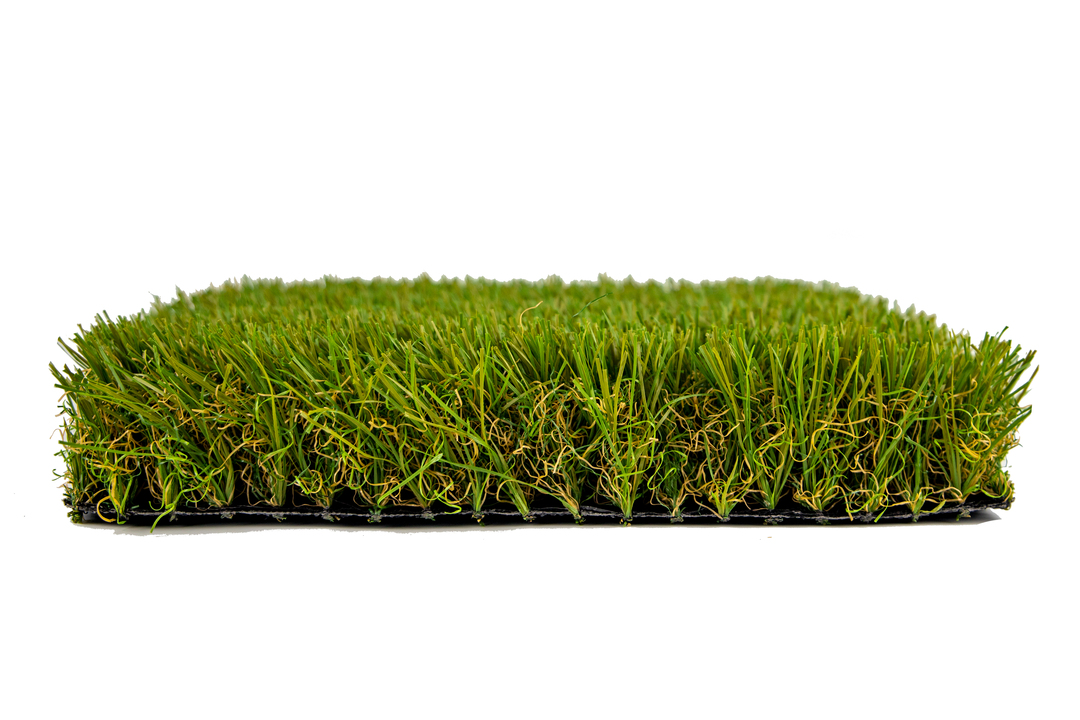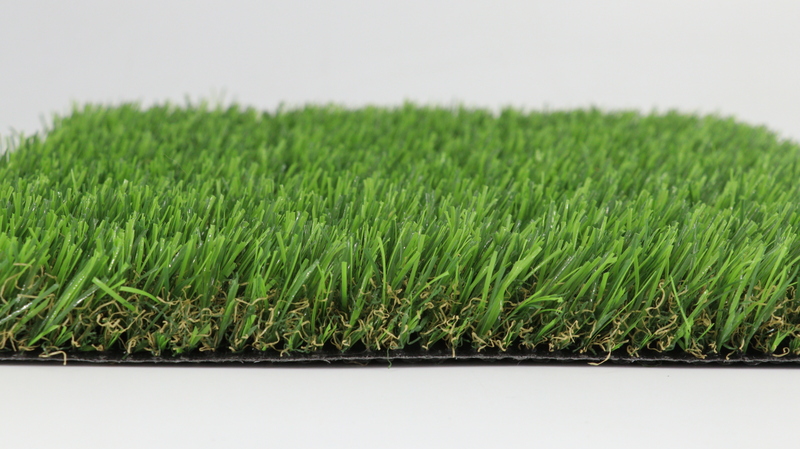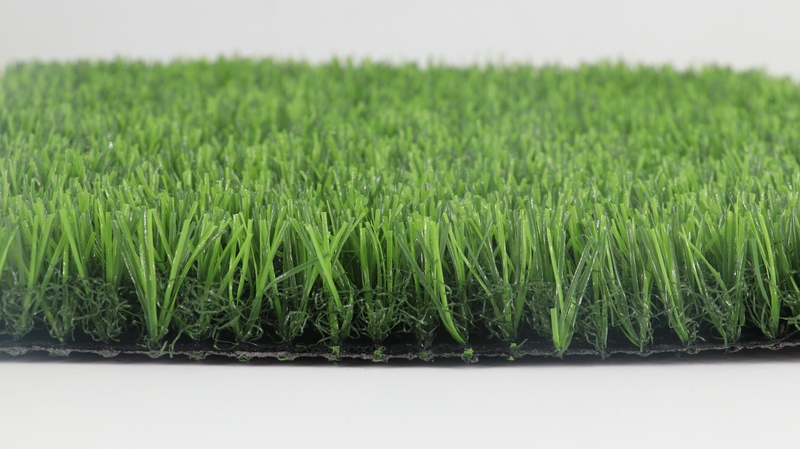
Choosing the best artificial turf for a football field involves more than finding a surface that looks like natural grass. The right system should suit the way the field will be used, support consistent play, and fit the project’s installation and maintenance requirements.
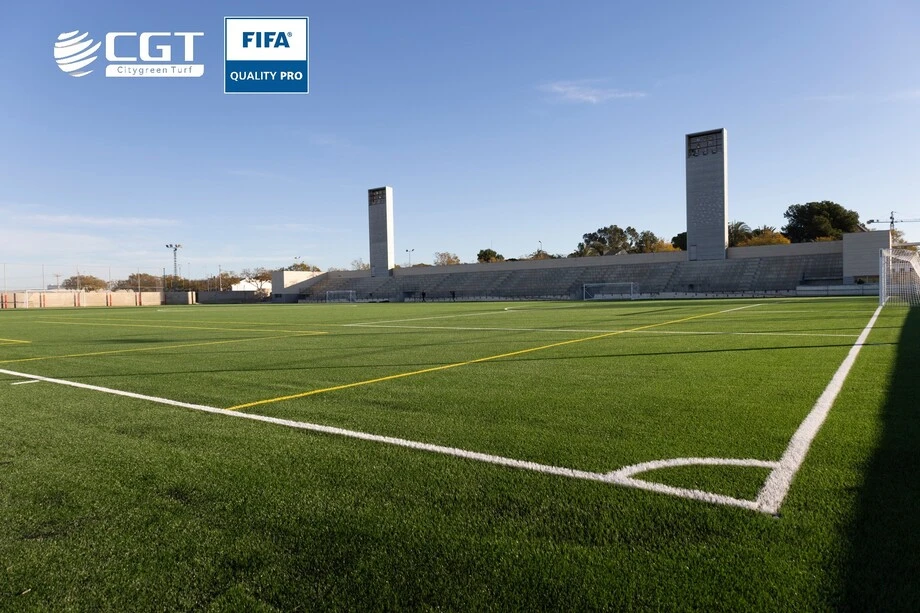
Artificial turf football field with white markings in Spain
Three specifications deserve particular attention: pile height, turf density, and infill. Each affects how the surface is designed and maintained, but none should be considered on its own. The backing, base, drainage, and any shock pad also contribute to the performance of the finished field.
This guide explains what these specifications mean, how common infill materials compare, and what to consider when selecting artificial grass for a football project.
What Makes Artificial Turf Suitable for Football Fields?
Football turf is designed for a different purpose from decorative landscape grass. It must withstand repeated running, turning, tackling, and ball movement across the playing surface.
When comparing artificial turf for football fields, consider the following:
- Playing characteristics: How the ball rolls and bounces, and how players interact with the surface.
- Expected usage: The number of playing hours, type of users, and level of competition.
- Wear resistance: How the turf system is expected to perform under the project’s usage conditions.
- Drainage: How the complete field handles rainfall and water moving through the surface.
- Maintenance: The equipment, labor, and ongoing care required.
- Total project cost: The cost of the turf, base, installation, infill, and maintenance over time.
A suitable football field is a complete system. Even a well-selected turf product depends on proper base construction, drainage, and installation. FIFA identifies basework and drainage as important parts of a football turf installation. Source: FIFA, Installing Football Turf
Choosing the Right Pile Height for Football Turf
What Is Pile Height?
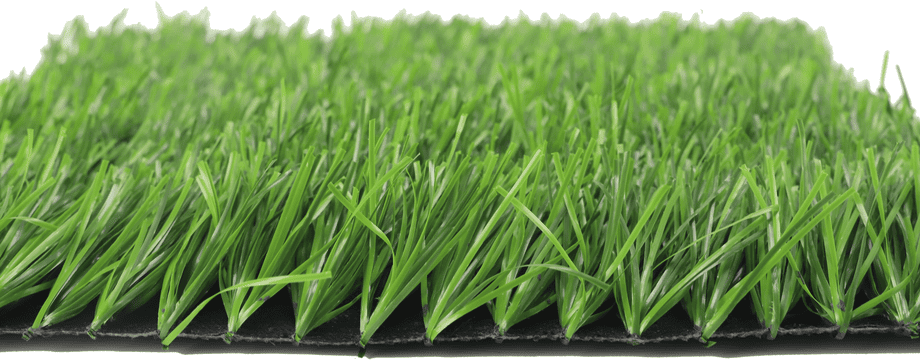
Diagram showing how football turf pile height is measured from the backing to the top of the fibers
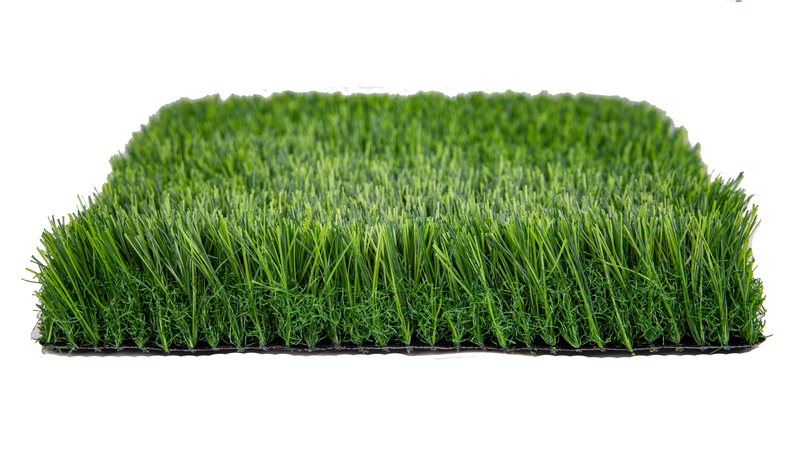
Pile height is the length of the artificial grass fibers measured from the backing to the top of the blades. It is usually expressed in millimeters.
In an infilled system, part of the fiber is surrounded by infill, while the upper portion remains exposed. For that reason, pile height should be considered together with the type and depth of infill specified for the system.
How Does Pile Height Affect Football Performance?
Pile height contributes to the way a football surface looks and feels, but its effect depends on the rest of the system.
A longer fiber may require a different infill configuration to support the blades and achieve the intended playing characteristics. A shorter fiber may be used in a different system design, potentially with different infill or shock pad requirements.
When comparing products, ask the supplier how the proposed pile height works with:
- Fiber shape and construction
- Turf density
- Infill type and depth
- Shock pad, if included
- Intended playing performance
A taller grass blade does not automatically mean a better football field. The goal is to choose a tested or appropriately specified system that suits the project.
Which Pile Height Should You Choose?
There is no single pile height that is ideal for every football field. Start with the way the surface will be used:
|
Project type |
Selection considerations |
|
Competitive football field |
Confirm competition requirements and request system test documentation. |
|
School or community field |
Consider the mix of users, playing hours, maintenance resources, and budget. |
|
Training facility |
Assess the expected intensity of use and wear in frequently used areas. |
|
Recreational or small-sided pitch |
Consider the available space, frequency of play, and desired playing experience. |
Ask for a complete system recommendation rather than selecting a grass height in isolation. If several options are available, compare samples and the corresponding product data sheets.
Understanding Football Turf Density
What Does Turf Density Mean?
Turf density describes how closely the grass is constructed. Product specifications commonly refer to measurements such as:
- Gauge: The distance between rows of stitching.
- Stitch rate: The number of stitches along a given length.
- Stitches per square meter: A way to describe how many tufting stitches are present across an area.
Suppliers may also provide information about yarn construction, including the number of filaments in a tuft. When comparing products, check that the density figures use the same unit and measurement method.
How Does Density Affect Durability and Appearance?
Density contributes to the appearance and structure of the turf. A denser construction may create a fuller-looking surface and provide a different level of support around the infill.
However, density alone cannot predict how long a field will last. Fiber material, yarn construction, backing, installation quality, playing hours, and maintenance also matter.
For a useful comparison, review density alongside pile height and the complete system specification.
Is Higher Density Always Better?
Not necessarily. Higher density can change the amount of material used and the way the turf interacts with infill, but it may also affect cost and maintenance requirements.
A suitable density is one that works with the chosen fiber, pile height, and infill to meet the field’s intended use. Ask suppliers to explain why their proposed specification is appropriate for your project.
Comparing Infill Options for Football Fields
Why Does Football Turf Need Infill?
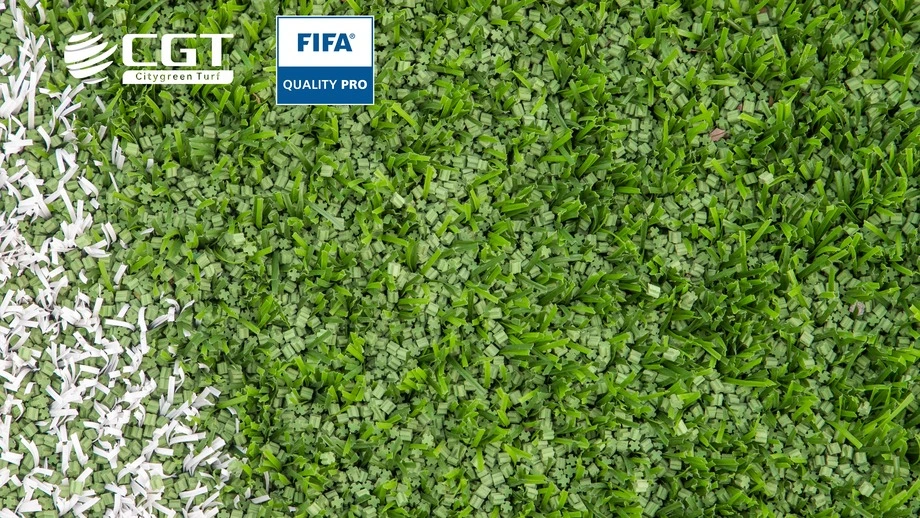
Cross-section of an infilled football turf system showing grass fibers, infill, backing, and base
Many football turf systems use infill between the grass fibers. Depending on the system, infill can help support the fibers, stabilize the turf, and contribute to the surface’s playing characteristics.
Some designs use more than one material. For example, a system may combine a stabilizing layer of sand with a performance infill. Other systems use mineral infill or are designed without infill. FIFA’s test manual discusses different football turf system types, including non-filled systems. Source: FIFA, Football Turf Test Manual update
|
Material names alone do not establish how a field will perform. Compare complete systems, including their installation instructions, performance documentation, and ongoing maintenance needs.
How to Choose the Right Infill
The right infill depends on the project’s priorities and location. Consider:
- System compatibility: Is the infill specified for the turf and any shock pad being proposed?
- Playing requirements: Does the complete system have suitable performance evidence for the field’s intended use?
- Climate: How might local heat, rainfall, or freezing conditions affect the material and its maintenance?
- Maintenance: Does the infill need regular redistribution, replenishment, or special equipment?
- Local rules: Are there restrictions or purchasing requirements that apply to the material?
- Long-term cost: What are the likely costs of installation, maintenance, and replacement?
For projects in the EU or EEA, check current rules before specifying synthetic granular infill. The European Chemicals Agency states that the restriction on placing granular infill for artificial sports surfaces on the market begins on 17 October 2031; applicability should be checked for the specific material and project. Source: ECHA
How Pile Height, Density, and Infill Work Together
Pile height, density, and infill should be selected as parts of one system. For a broader look at the complete field system, including the base, drainage, and testing, see our guide to choosing a FIFA football turf system.
For example, two turf products may have the same pile height but different stitch rates and yarn constructions. They may therefore require different infill specifications and produce different playing characteristics.
Likewise, changing the infill material or depth in a proposed system can alter its performance. A field that combines components without following the system specification may not perform like the sample or tested configuration.
Before making a decision, ask for a specification covering:
- Pile height and yarn details
- Gauge and stitch rate
- Backing construction
- Infill material, grading, and specified depth or quantity
- Shock pad specification, where applicable
- Installation and maintenance instructions
- Relevant test reports for the complete system
How to Choose Artificial Turf for Your Football Project
A successful football turf project starts with a clear understanding of how the field will be used. A club training pitch, for example, may need to accommodate regular practice sessions, youth development, and competitive play. These activities place different demands on the surface, so the choice of turf should be considered alongside the project’s playing requirements, installation conditions, and maintenance plan.
CGT's experience includes a football club project featuring two FIFA football pitches. The project illustrates how individual product specifications—such as pile height, density, and infill—fit into a wider field solution. For a club planning multiple pitches, each selection should be assessed against the intended use of the fields and the requirements of the complete turf system.
With experience in football turf products and field projects, we support clients in comparing suitable configurations for their specific needs. Whether the project is a club training facility, a school field, or a community pitch, the aim is to help the client move from individual product parameters to a practical solution for the whole field.
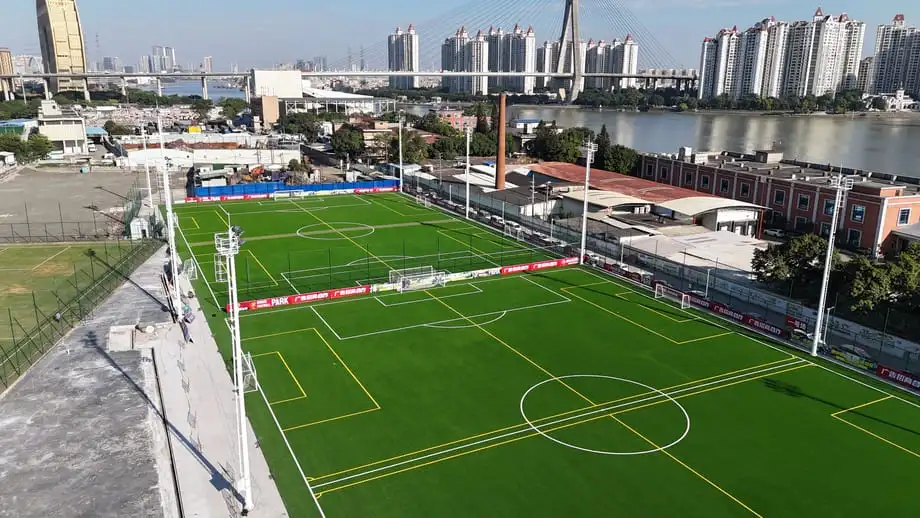
Two artificial football pitches at a football club project
1. Define How the Field Will Be Used
Start by identifying the main users and activities. A school field used for lessons and community games may have different requirements from a club training facility or a competitive stadium.
Estimate the expected playing hours and identify any areas likely to receive concentrated use, such as goalmouths and training zones.
2. Set Your Project Requirements
Consider the performance, appearance, and maintenance priorities for the field. If the project must meet a league, governing body, or tender requirement, identify those criteria before choosing products.
Where FIFA certification is required, distinguish between documentation for a turf system and certification of the finished field. FIFA states that the installed pitch must pass a field test before it receives a FIFA quality mark. Source: FIFA, Installing Football Turf
3. Compare Complete Turf Systems
Request quotations that specify the same scope where possible. A useful comparison should cover the grass, infill, any shock pad, base preparation, drainage and installation.
If one quotation excludes work that another includes, the initial prices may not be directly comparable.
4. Review Samples and Documentation
Ask for product samples and technical data sheets. If the project has specific performance requirements, request relevant test reports and confirm that the proposed configuration matches the documented system.
A sample helps you inspect the fiber and appearance, but it cannot by itself demonstrate how the completed field will perform.
5. Plan for Installation and Maintenance
Discuss the site conditions, drainage design, and installation schedule with qualified project partners. Also establish who will maintain the field and what equipment is needed. For an overview of the construction stages, read our guide to building an artificial football field.
Routine care can include removing debris, brushing the surface, checking infill levels, and inspecting seams. Follow the maintenance instructions for the selected system.
Find the Right Football Turf for Your Project
The best artificial turf for a football field is the system that matches its intended use, performance requirements, and maintenance plan. Pile height, density, and infill are essential starting points, but the final decision should also account for installation, drainage, and the complete field design.
Whether you are planning a school pitch, training facility, or community football field, compare suitable configurations and request the technical information needed for your project.