

Introduction
Modern sports facility projects have become far more complex than simply purchasing artificial turf or sports flooring materials. Whether it is a football stadium, professional training ground, padel club, or multi-sport complex, successful project delivery depends on the integration of engineering systems, construction standards, certified performance, and on-site execution capabilities.
Yet across the industry, many suppliers still operate as material vendors rather than project solution providers. They can deliver turf rolls or surface products, but large-scale sports infrastructure projects require much more than that.
Professional sports facilities involve drainage engineering, base construction, shock absorption systems, environmental adaptation, installation sequencing, compliance testing, and long-term maintenance planning. Without proper system integration, even high-quality materials may fail to achieve expected performance standards after installation.
As international sports projects continue to grow across the Middle East, Europe, Asia, and emerging markets, developers and investors are increasingly prioritizing partners capable of delivering complete sports facility systems rather than standalone products.
Why Large Sports Projects Require More Than Just Materials
Professional sports facilities are not defined by turf products alone. The final quality of a field depends on how every part of the system performs together under real-world conditions.
Drainage engineering, sub-base stability, shock absorption, installation precision, climate adaptation, and construction scheduling all influence the long-term performance of a sports venue. In large international projects, these factors become even more critical because timelines are often compressed around major sporting events.
During the delivery of the Bahrain Asian Youth Games competition venue, for example, the entire sports surface system had to be designed, constructed, tested, and officially handed over within just 45 days before the opening ceremony.
For a multi-sport event involving athletes from 45 National Olympic Committees across Asia, project readiness was directly tied to scheduling precision and execution efficiency. Every stage—from engineering coordination and logistics management to installation sequencing and performance testing—had to operate under strict timelines while maintaining international competition standards.
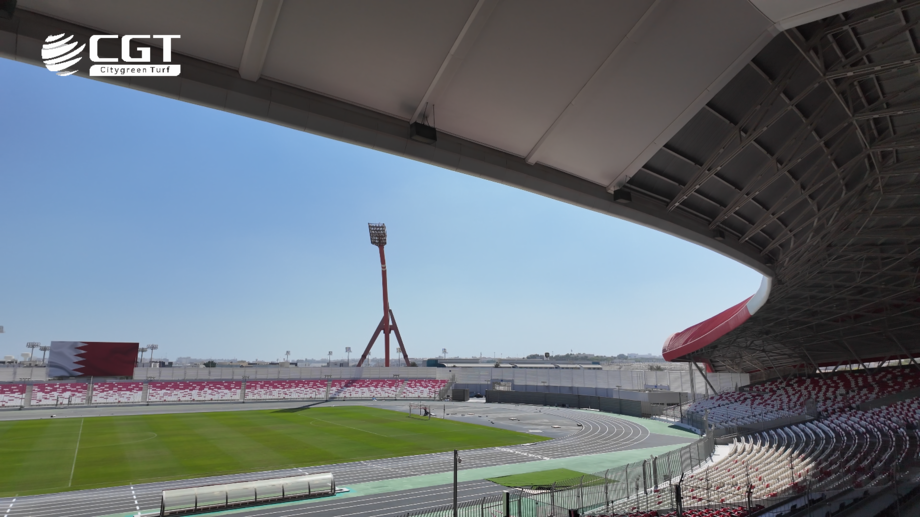
High-performance indoor sports surface installation completed at the Bahrain sports hall, showcasing precise engineering execution for high-profile multi-sport events. (The completed Bahrain multi-sport arena stands as a testament to seamless engineering coordination and on-time global project delivery.)
Delivering a venue under these conditions requires far more than manufacturing capability. It demands rapid mobilization, integrated project management, on-site execution experience, and the ability to coordinate multiple technical processes simultaneously.
This is one of the biggest differences between a traditional material supplier and a true sports facility delivery partner.
In professional projects, the success of the venue is determined not only by the materials installed but by how effectively the complete system is engineered, coordinated, and executed.
Certified Systems for Professional Sports Facilities
As sports infrastructure standards continue to evolve globally, certifications have become increasingly important in ensuring field quality, athlete safety, and long-term performance consistency.
However, modern certification systems are no longer focused solely on the surface material itself. Instead, they evaluate how the entire sports system performs as an integrated solution.
FIFA Certification and System-Level Performance
For professional football facilities, FIFA certification standards evaluate multiple aspects of field performance, including:
1. Ball roll
2. Ball rebound
3. Shock absorption
4. Vertical deformation
5. Rotational resistance
6. Energy restitution
7. Surface interaction and player safety performance
Achieving these standards requires precise coordination between turf systems, shock pads, drainage layers, base construction, and installation quality.
This shift toward full-system validation is becoming even more evident under the latest TM-Football-Turf-2024 framework.
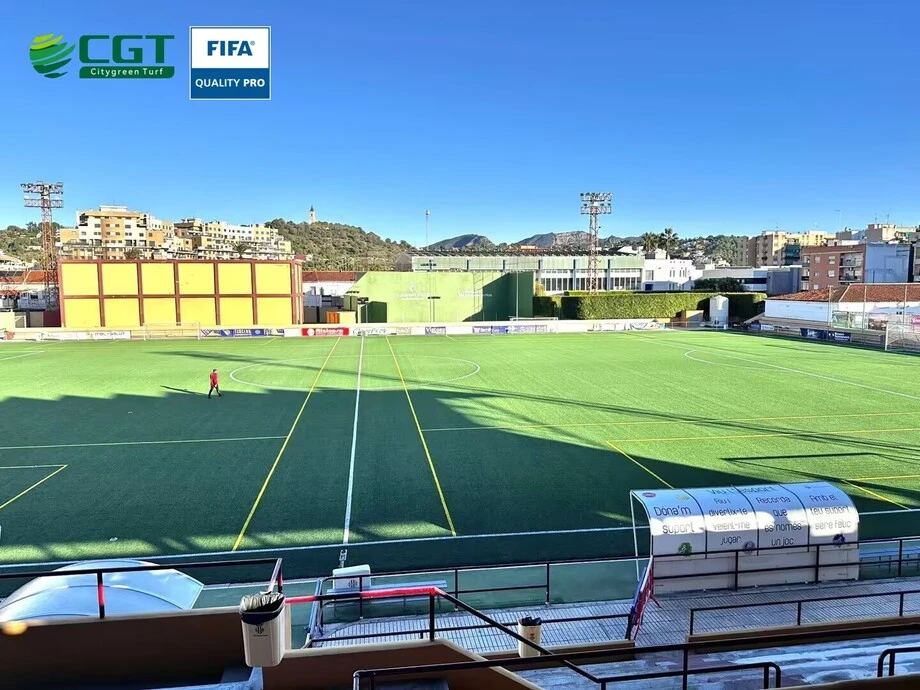
FIFA Quality Pro certified football pitch at Campo de Fútbol de Balsicas under the TM-Football-Turf-2024 standard
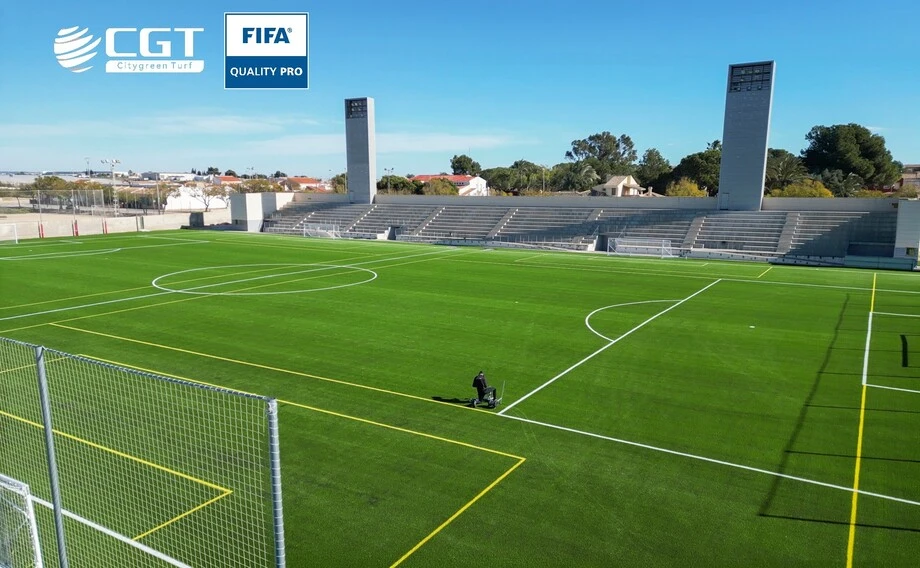
Professional football turf system at Campo de Fútbol Municipal Dolores de Pacheco certified under FIFA TM 2024 requirements
Unlike previous certification systems focused primarily on surface performance, the TM2024 framework introduces stricter requirements across durability, environmental sustainability, and integrated system performance.
Under this standard, every component—from turf fiber structure to base engineering and installation execution—must function together as a unified performance system.
Successfully implementing these standards in real-world projects requires more than laboratory-tested products. It demands accurate interpretation of FIFA testing protocols, advanced engineering capability, precision manufacturing, and high-quality on-site construction management.
The successful delivery and simultaneous FIFA Quality Pro certification of these two projects demonstrate not only product quality, but also the ability to deliver standardized, repeatable professional football systems under the latest global requirements.
Beyond FIFA: CE, ISO, and International Compliance Standards
In addition to sports-specific certifications, international sports facility projects often require broader compliance frameworks covering manufacturing consistency, material safety, environmental responsibility, and quality management processes.
These may include:
1. CE certification for regulatory and product compliance
2. ISO quality management systems
3. Environmental and sustainability standards
4. Durability and lifecycle testing protocols
5. Manufacturing and installation quality controls
For international developers, clubs, and government-funded projects, these standards help reduce procurement risk and improve consistency across large-scale installations.
More importantly, they ensure that sports systems can maintain stable performance throughout different climates, usage conditions, and project environments over the long term.
Overseas Installation and On-Site Project Execution
Global sports facility delivery involves far more than exporting materials internationally. The real challenge lies in maintaining construction quality, installation precision, and performance consistency across different countries, climates, and project conditions.
This is where on-site execution capability becomes critical.
Professional sports facility installation requires specialized expertise in:
1. Stadium-grade turf installation
2. Base preparation and leveling
3. Shock pad integration
4. Seam alignment precision
5. Drainage coordination
6. Environmental adaptation
7. FIFA-standard preparation and testing
Without experienced project execution teams, even certified systems may struggle to achieve the required final performance standards.
Delivering Elite-Level Training Environments
Elite training facilities often place even higher demands on consistency and durability than competition venues because the surface must withstand intensive daily use throughout the season.
This level of requirement can be seen in projects such as the delivered training pitch for Tottenham Hotspur's Enfield training centre, where the facility achieved FIFA Quality Pro certification under professional training standards.
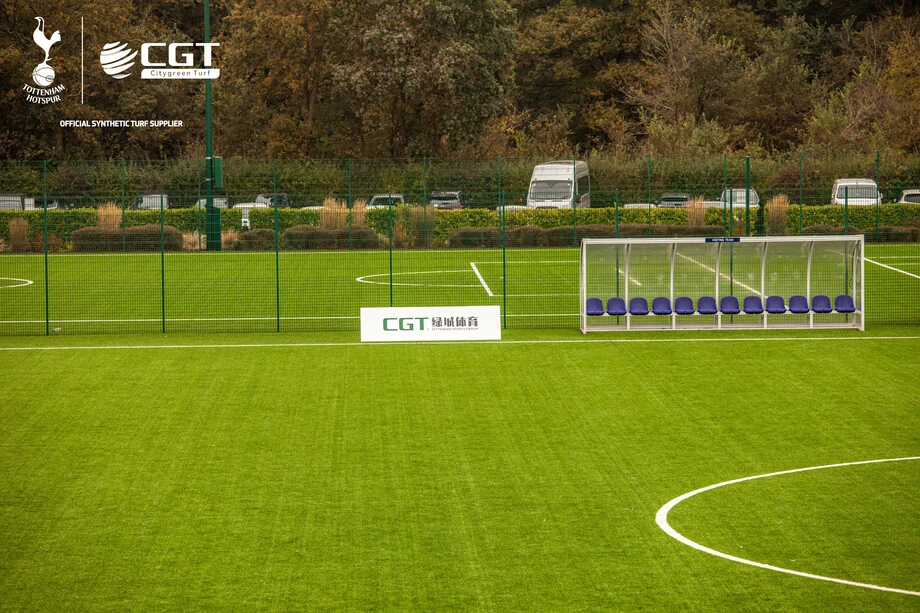
FIFA Quality Pro certified football training pitch at Tottenham Hotspur's Enfield training centre
Built to support elite-level football operations, the project combined CGT’s advanced football turf system with strict quality control, efficient project coordination, and precise installation execution throughout the delivery process.
For professional clubs, the challenge is not simply installing a football field. It is creating a long-term training environment capable of maintaining consistent player performance, safety, and durability under continuous usage.
Projects like these highlight the growing importance of full-service project execution capabilities in modern sports infrastructure delivery.
End-to-End Support Throughout the Project Lifecycle
Large sports facility projects require long-term coordination across multiple stages of development. As a result, professional project delivery increasingly depends on comprehensive support throughout the entire project lifecycle.
Pre-Project Planning and Consultation
At the early stages, project support may include:
1. Facility planning consultation
2. Sports system recommendations
3. Budget evaluation
4. Climate suitability analysis
5. Engineering assessment
6. Surface performance planning
These early decisions directly influence construction efficiency and long-term operational performance.
Construction Phase Coordination
During project execution, effective support often includes:
1. Installation supervision
2. Scheduling coordination
3. Technical guidance
4. Quality inspection
5. Logistics management
6. On-site troubleshooting
Strong coordination during construction is essential for maintaining project timelines and ensuring installation quality across all system components.
Post-Installation Service and Maintenance
Long-term field performance also depends heavily on maintenance planning and operational management.
Professional support may include:
1. Maintenance training
2. Surface care guidance
3. Infill management
4. Drainage inspection procedures
5. Repair recommendations
6. Lifecycle optimization planning
This ongoing support helps maximize the durability, appearance, and performance consistency of the sports facility over time.
Different Sports Facilities Require Different System Solutions
Every sports facility operates under different performance requirements, usage intensity, and environmental conditions. As a result, no single sports surface system fits every project.
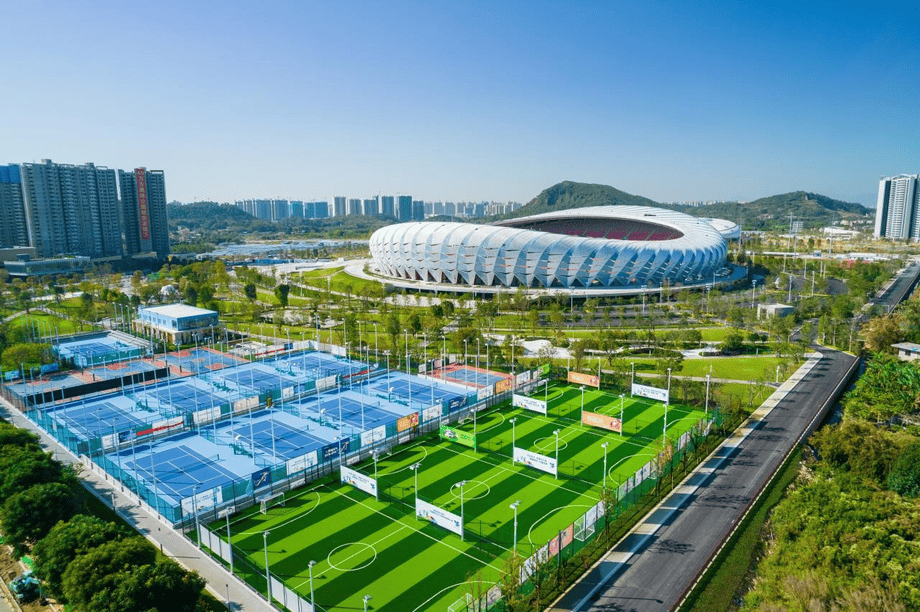
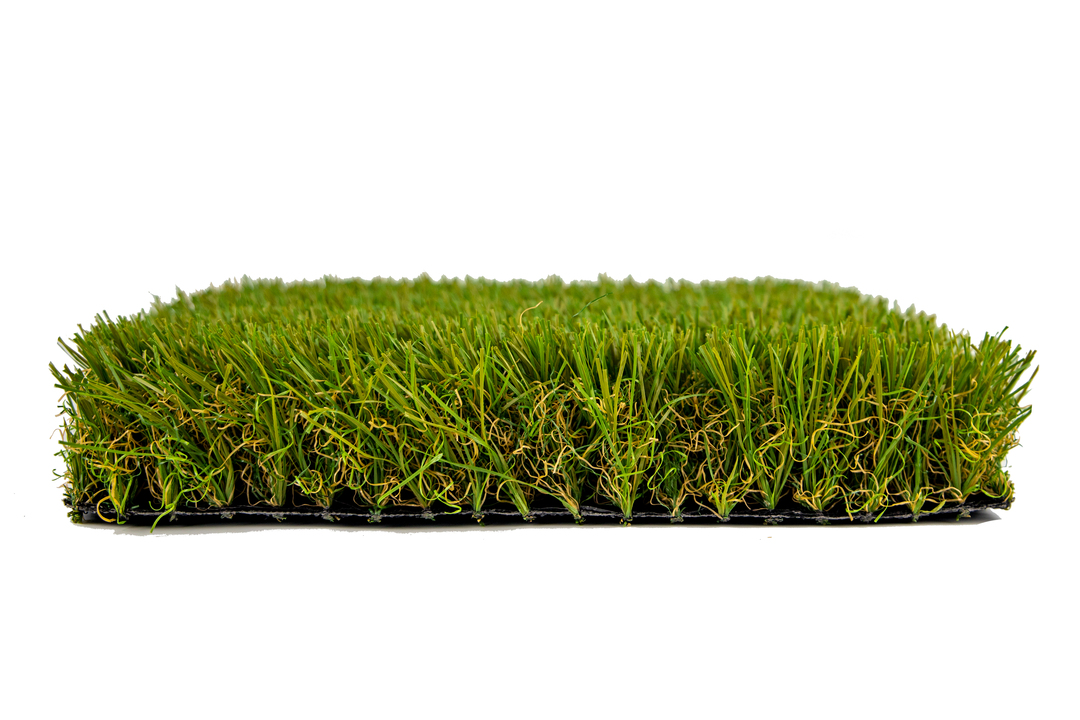
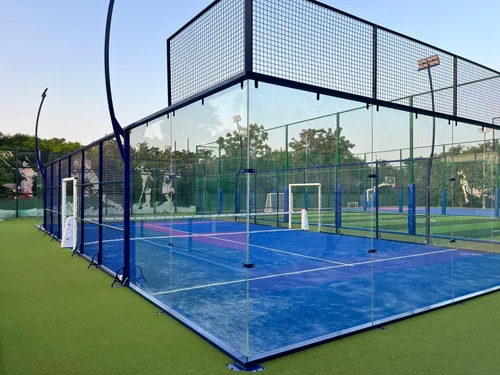
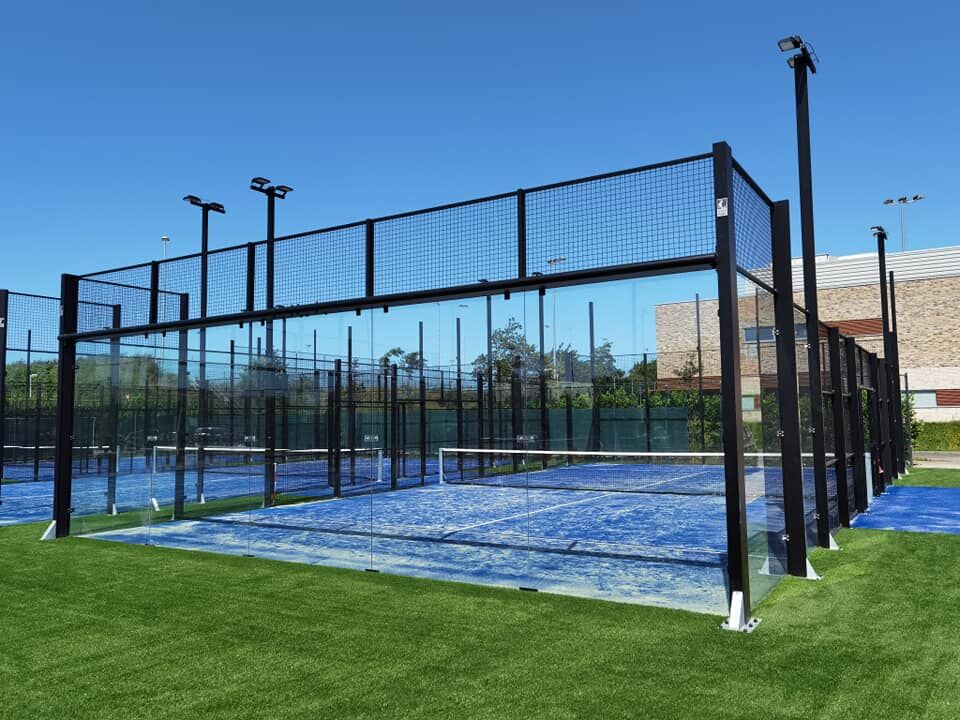
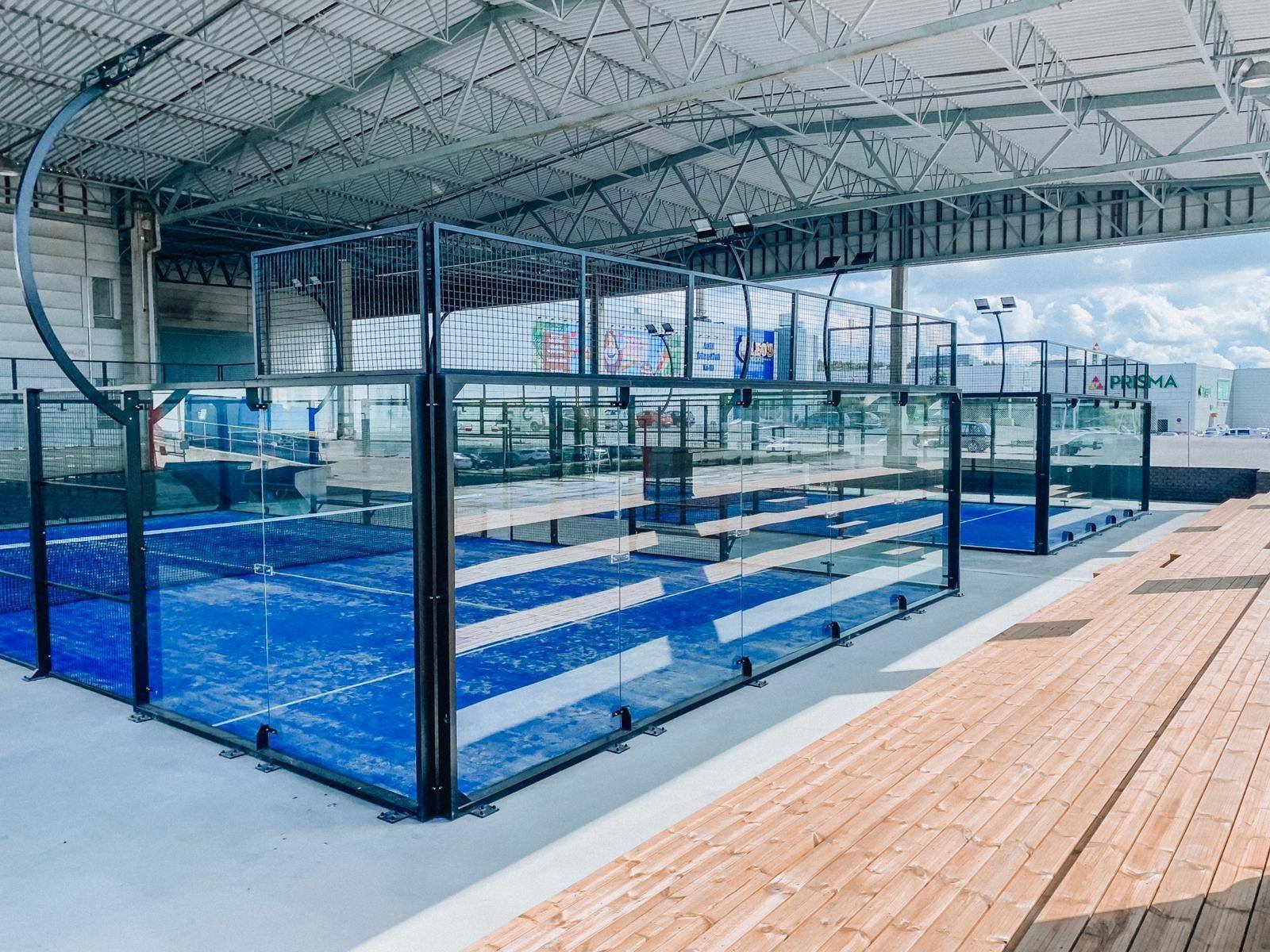
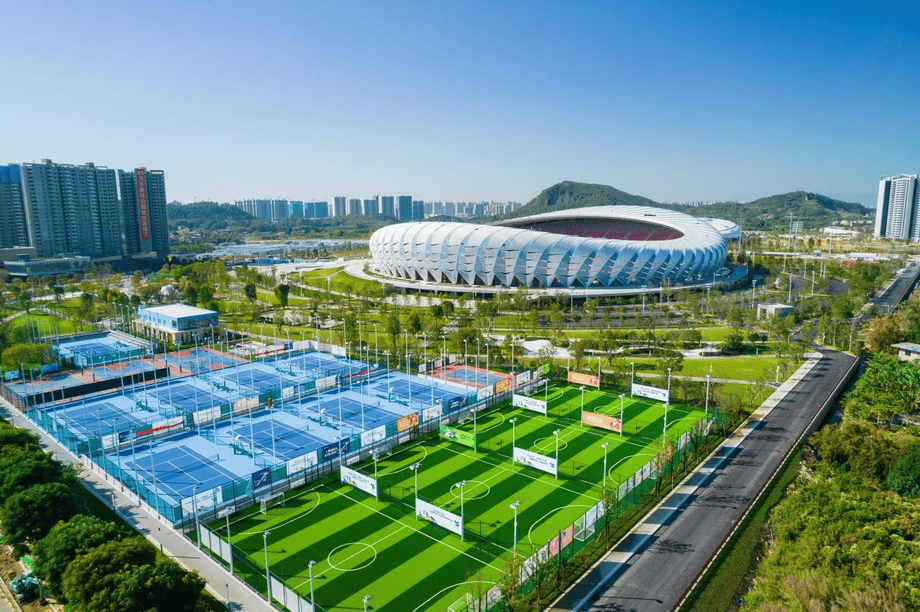
Different sports environments require customized surface systems, engineering standards, and long-term performance planning
Football Stadium Turf Systems
Professional stadiums prioritize:
1. Elite athlete performance
2. FIFA-standard consistency
3. Broadcast-quality appearance
4. High drainage efficiency
5. Intensive usage durability
These facilities often require highly engineered systems with advanced performance specifications.
Football Training Facilities
Training grounds focus more heavily on:
1. Daily usage durability
2. Player safety
3. Maintenance efficiency
4. Long-term operational reliability
Because training facilities experience constant usage throughout the season, durability and consistency become especially important.
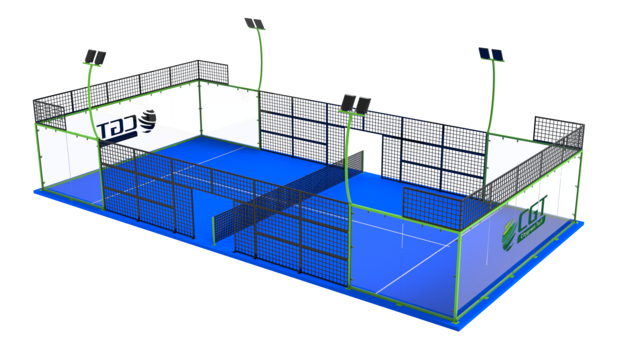
Padel Court Systems
Padel courts require highly specialized surface behavior characteristics, including:
1. Controlled ball response
2. Player traction stability
3. Consistent bounce performance
4. Structural compatibility
5. Weather resistance
As global padel development accelerates, integrated padel system solutions are becoming increasingly important for clubs and commercial sports operators.
Multi-Sport Facilities
Multi-sport venues often require flexible system designs capable of supporting different sporting activities while balancing durability, maintenance efficiency, and lifecycle cost control.
For these facilities, integrated engineering planning becomes essential to ensure long-term operational success across diverse usage scenarios.
Choosing the Right Sports Facility Partner
Selecting the right sports facility partner is one of the most important decisions in any stadium, training ground, or multi-sport project.
In today's industry, reliable project delivery depends on much more than supplying turf materials.
Professional sports infrastructure projects increasingly require partners capable of combining:
1. Certified sports systems
2. Engineering integration
3. International project execution
4. On-site installation management
5. Scheduling coordination
6. Technical consultation
7. Long-term maintenance support
Most importantly, successful partners understand that professional sports facilities are complete engineered systems—not standalone product installations.
As global sports infrastructure standards continue to evolve, the industry is steadily shifting toward integrated delivery models focused on long-term field performance, operational reliability, and international compliance.
Looking for a Professional Sports Facility Partner?
Whether you are planning a football stadium, elite training ground, padel club, or multi-sport facility, successful project delivery requires more than materials alone.